Has living in Japan inspired you to further your Japanese education? Check out these helpful links. Many of these resources are free or at least have a free trial. This post is only meant to inform you of Japanese study resources available. Please do not feel compelled to buy anything just because it was mentioned here. There are plenty of free resources to learn Japanese.
JET Programme Resources
Japanese Language Courses (Beginner/Intermediate/Advanced) are free Japanese courses available for JETs. Similarly, the JET Programme offers an online Translation and Interpretation course (application in August) and an in-person one available to people who have completed the online course. (The link is currently unavailable on the JET Programme website. Please check it out when the website is back up.)
AJET has a Studying Japanese page full of resources. Did you know that a JET alumni made a Japanese language learning comic called Crystal Hunters Manga? This is one of the great resources that can be found on the AJET webpage.
Non-JET Resources
Tofugu and WaniKani
Tofugu is a Japanese culture and language blog. They regularly post things like the Best Hiragana and Katakana Learning Resources or the Best Kanji Learning Programs where they review popular Japanese studying resources. In the Best Kanji Learning Programs blog post, you can find a description of Tofugu’s own Kanji learning program called WaniKani. WaniKani is expensive, however, the first three levels are free. Their one-year and lifetime memberships go on sale once a year in December. There is also a very active WaniKani Community forum which can make self-studying less daunting.
In Kuma sensei’s Japanese Study Resources webpage there is a list of YouTube channels for studying Japanese. Japanese with Yuka is a YouTube channel that specifically focuses on JLPT prep. There are many Japanese teachers like Yuka sensei who post free lessons on YouTube.
As for reading, Tadoku is a website with free Japanese graded readers. There is also a website called Todaii Japanese where you can read Japanese news articles and do JLPT reading practice. You can toggle furigana on and off while you are reading, listen to the article while you read, and even see a summary of grammar points used in the article. After reading, you can also take a short reading comprehension quiz. If you use the free version, you can read up to three articles a day.
Japan International Cooperation Center (JICE) has free (online and in-person) Japanese for Work courses for foreign residents. Even in the online class (which is conducted over Zoom) you will have classmates and a teacher. Participants will study workplace Japanese, do a mock job interview in Japanese, and write a Japanese resume. This class is extremely high quality. It is kind of unbelievable that it is free.
So, you will be retiring from the JET Programme! What’s next? Below are some resources to help you start job hunting. Most (but not all) of these resources are for people who want to work in Japan.
JET Programme Resources
For starters, as a JET, you should take advantage of the JET Programme’s Career Vision Conference and Job Hunting Webinar in November. You will hear presentations from former JETs in many different industries located all over the world. The JET Programme also has two, in-person job fairs every year. These job fairs host companies that are eager to hire JETs. (The JET Programme Website is temporarily down, so information about the job fairs is currently unavailable. Check it out when the webpage is back up!)
Hello Work is similar to the unemployment office in your home country. They have a job search engine and you can even go to Hello Work in-person to get help from workers there. All government positions (like direct hire ALT or CIR positions) would be posted here. Unfortunately, Hello Work locations in Okinawa do not have foreign language assistance. Also, the job search engine is in Japanese.
On ALT Direct, you can see BOEs that are known for hiring ALT directly (rather than through the JET Programme or a dispatch company). If a BOE is hiring, they will also post the link to their website.
Finally, the Japan International Cooperation Center (JICE) in collaboration with Hello Work offers free Japanese for Work courses (in person and online) for foreign residents. In addition to learning workplace Japanese, you will receive instruction on job hunting in Japan, Japanese job interviews, and how to write a Japanese resume.
From giant “murder hornets” to giant centipedes, many people are aware of the more infamous, more dangerous insects that call Japan home. Luckily, Okinawa does not have many of these! It is very unlikely that JETs living on the main island will ever see or have to deal with either the giant “murder hornet” or the giant centipede. However, Okinawa is still a tropical island, coming with its own diverse ecosystem.
Okinawa is home to many creatures–some of which are potentially harmful to humans and some of which are not. This page will cover some of the more common horrors and wonders of the Okinawan wilderness with the intent to increase awareness, not fear.
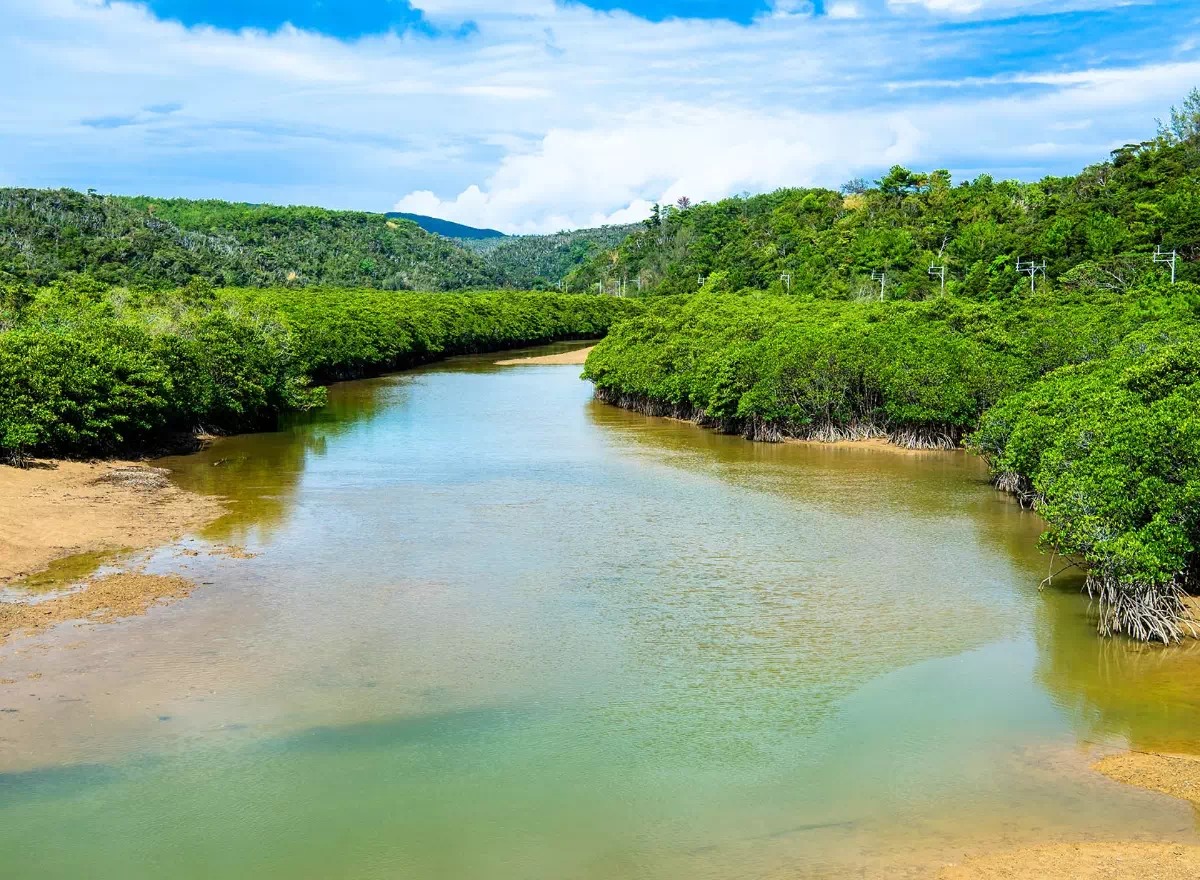
While not as well known as Okinawa’s beaches, Okinawa has several designated national parks that are equally as stunning. In the northern half of Okinawa’s main island is Yanbaru National Park, a UNESCO World Heritage Site, and Iriomote-Ishigaki National Park spans two of the outer islands. Both parks possess wonderful hiking trails and a variety of wildlife. The Iriomote-Ishigaki National Park boasts Japan’s largest mangrove forest–an impressive sight to see with the trees’ distinct roots rising out of the water.
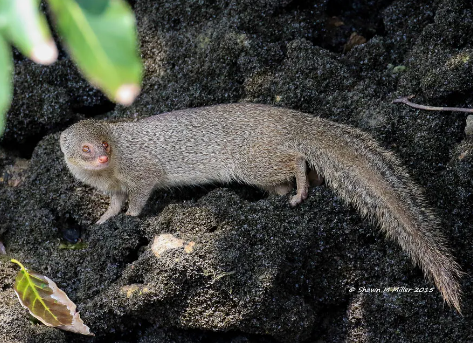
Mongoose (マングース)
The mongoose, a small, carnivorous mammal, was introduced to Okinawa in the 1910s with the intention that they would control the habu population. However, mongoose are diurnal in comparison to the nocturnal habu, and this difference in lifestyles ultimately resulted in failure of the original intention. While mongoose have a special mutation that grants them immunity from habu venom and allows them to eat these snakes, they are just as content to eat various birds, causing several native bird species to become endangered.
While mongoose are not dangerous to humans, they often make the poor decision to cross the street without looking both ways. When driving by forested areas, please be aware that they may pop out suddenly.
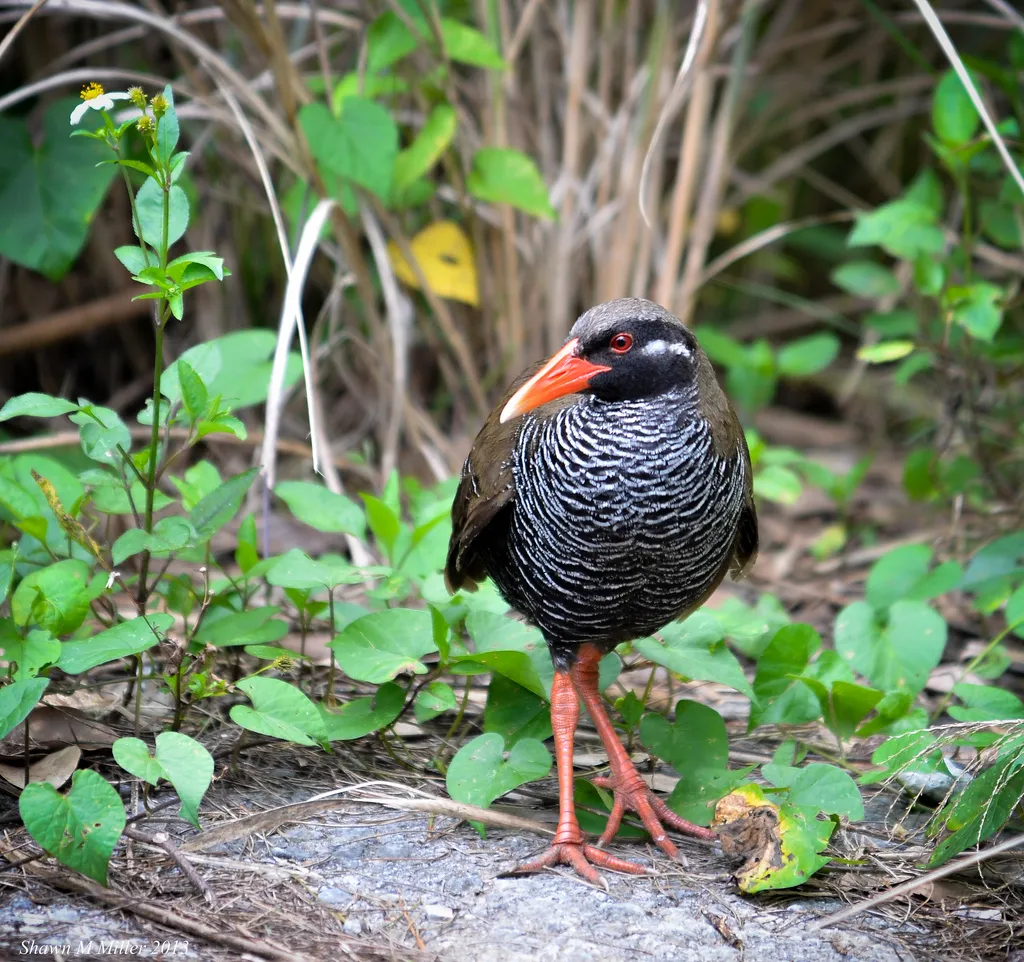
The Okinawan rail is an endangered bird endemic to the Ryukyu Islands. This living national treasure may be flightless but makes up for this shortcoming with its speed. Adult rails have distinct red eyes and legs.
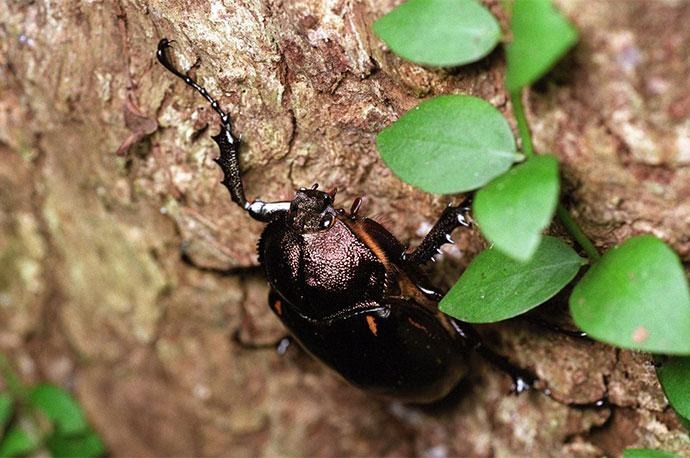
Yanbaru long-armed scarab beetle (yanbaru te naga kogane やんばるテナガコガネ)
The largest beetle in Japan with a total length of 13-14 cm, the Yanbaru long-armed scarab beetle is extremely rare. Upon its discovery in the 1980s, this beetle was already thought to be near extinction, making it an endangered species.
While there are many types of snakes in Okinawa, only a few species are venomous to humans. Of these, the most commonly sighted are the Okinawan habu (golden habu), the Taiwanese habu (brown-spotted pit viper), and the princess habu (hime habu). Although this may make it seem as if Okinawa is teeming with snakes, it is not. People living in urban areas are far more likely to encounter a habu at an izakaya–habu shu, an alcohol made with a fermented habu, is considered a prefectural specialty–than they are in their daily life. Those living in more rural areas may see an occasional snake, but should not be overly worried about the danger.
Okinawan Habu (Golden Habu)
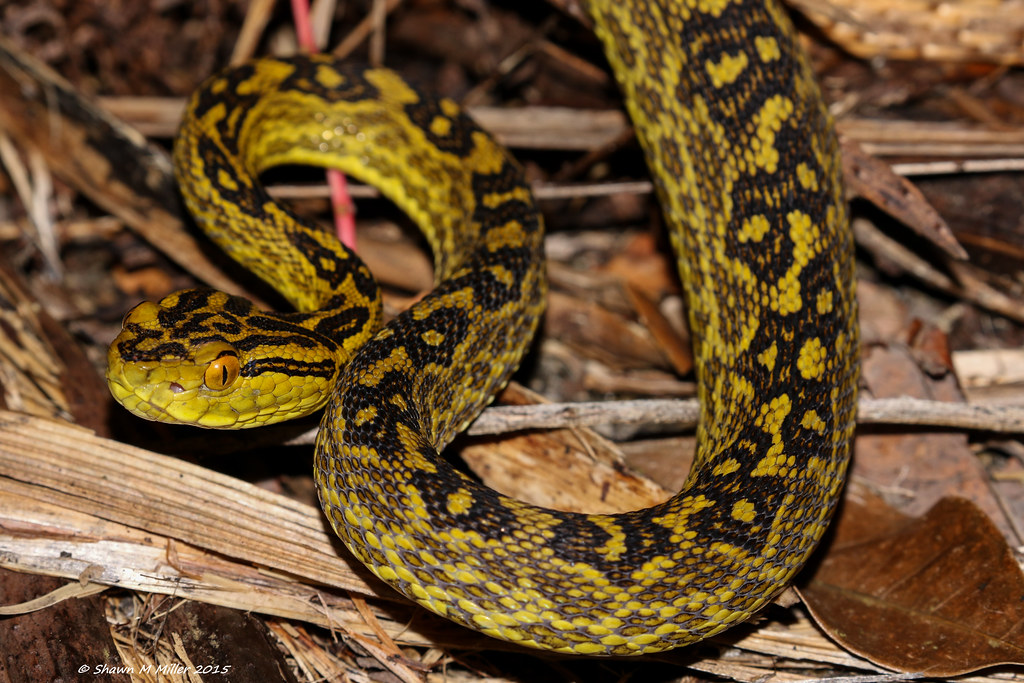
This endemic snake is the largest and most venomous of all the snakes on the island. Identifiable through its golden color and slender body, the Okinawan habu is often found on rock walls–such as those in caves or tombs–and near tree lines–such as those near parks and farms.
According to reports from the Okinawa Institute of Science and Technology (OIST), around 50 bites from this snake are reported every year. While the venom from the Okinawan habu is hemotoxic, meaning that it destroys blood cells and tissues, immediate treatment has resulted in a less than 1% fatality rate.
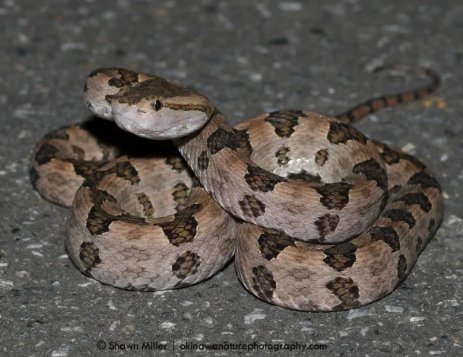
Accidentally released into Okinawa’s wilderness during the 1970s, the Taiwanese habu is grayish-brown in color with large, distinct splotches and a triangular head.
Similar to the Okinawan habu, these snakes are often found on rock walls, in caves, and near trees.
While the Taiwanese habu is less venomous than the Okinawan habu, the Taiwanese habu is aggressive and will strike.
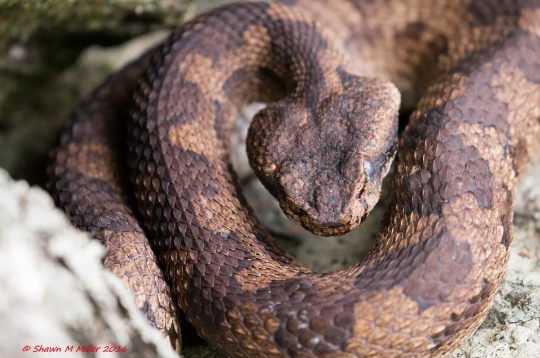
The smallest and most commonly spotted habu in Okinawa, the princess habu ranges in size from 40 to 80 centimeters. Unlike the previous two habu, the princess habu prefers wet places, such as ponds, ditches, creeks, and rivers.
Snake bites are not a serious area of concern for most OkiJETs. Those working in fields, such as farmers, account for the majority of bites. Only 5% of habu bites occur in mountainous regions.
If bitten, identify the snake.
Remember that not all snakes are habu. Being able to give a visual description of the snake can aid in your treatment. However, do not attempt to catch the snake as it may try to bite you again.
Seek medical attention.
If you are traveling with companions, have them escort you slowly to the hospital, as running can cause the venom to spread faster.
If you are alone, call 119 as soon as you can. Wrap a cloth gently around the upper part of the extremity closer to your heart than the bite.
Reminders
Here are a few bullet points to remember when it comes to snakes in Japan:
Nocturnal Creatures
Habu are nocturnal, so you are unlikely to see them during the day. If you enjoy exercising at night and live in a rural area, bring a flashlight and wear protective clothing on your legs.
Leave them alone.
As with most snakes, habu are not interested in you. If you see a habu, give it a wide berth. Snakes are more likely to attack when they feel threatened.
Not fatal
Habu bites have a fatality rate of less than 1%, meaning that you do not need to fear them. Many Okinawans living in urban areas have never encountered one in the wild.
For detailed information regarding snakes, please read the official pamphlet provided by the Okinawan government: ハブに関する普及啓発_リーフレット英語 (okinawa.lg.jp)
Spiders (kumo くも)
Spiders are, unfortunately, a part of daily life in Japan regardless of where you live. Besides occasionally making one’s heart race, spiders in Japan are relatively harmless to humans. The most common spiders that you will encounter are tiny jumping spiders. If you are (un)lucky, you may encounter some of the larger species.
Golden orb weaver (joro spider joro gumo ジョロウグモ)
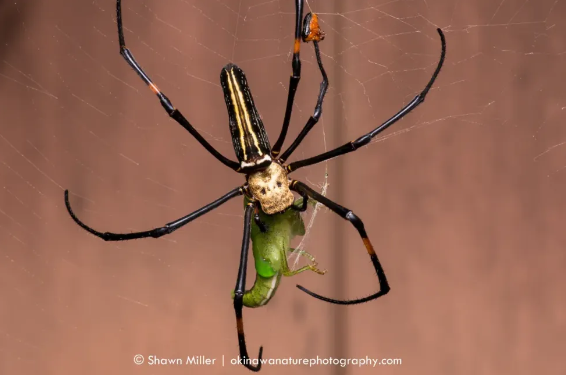
If you are familiar with Japanese folklore, you may have heard of the golden orb weaver who is often depicted as a woman that entraps and feasts on men. However, the actual spider prefers to feast on insects that it traps in its large web.
These spiders can be commonly seen hanging between trees and bushes. While these spiders are timid, they can bite when threatened. Bites can be painful, but do not cause lasting damage to humans.
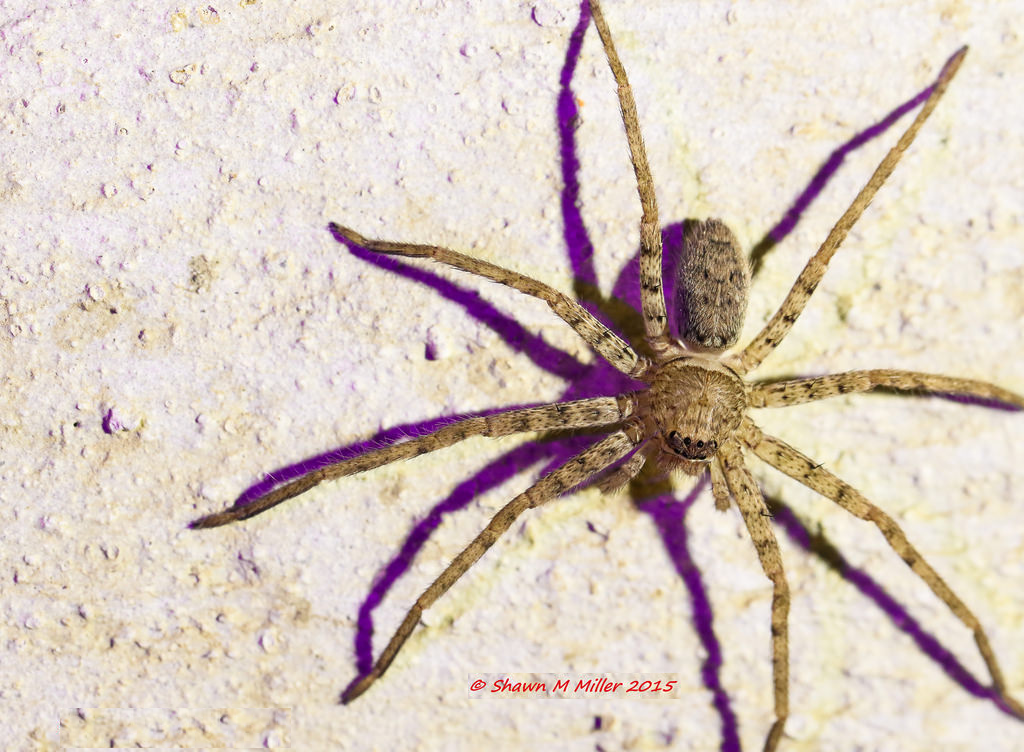
The huntsman spider is perhaps one of the more well-known spiders of Okinawa. Their bodies are more flat than the average spider, and their legs are adapted to clinging on to various surfaces–even a speeding car can’t shake them! Their fame tends to come from their mobility and size; huntsman spiders can both run and jump with tremendous speed. At their largest, the huntsman spider can be as long as a human fist, though their size doesn’t always help make them visible, so be sure to check shoes and other dark places carefully before exposing your appendages.
Although huntsman spiders are poisonous, their venom is relatively harmless. Pain, swelling, and skin irritation are common symptoms, as is the typical “ewewewew” reaction upon seeing one.
Protip: Spraying a huntsman spider (or many insects, for that matter) with a mixture of either soap and water or fabric softener and water works wonders for slowing them down.
Part of Okinawa’s unique charm stems from its deep connection with the ocean. As such, Okinawans have a deep respect for the ocean and its many mysteries. We recommend that all OkiJETs visit the famous Churaumi Aquarium during their time here to learn more about the wildlife inhabiting the waters surrounding the many islands. We also recommend trying some of the many marine sports available, such as swimming, snorkeling, boating, and scuba diving. While enjoying the ocean, please be mindful of the following wildlife:
Cone Snails (imogai イモガイ)
It’s said that every rose has its thorns, and the same is true for cone snails. The shells of these snails are adored by collectors and beachcombers alike due to their varying patterns. With over 900 different species, it’s highly likely you’ll encounter one at some point during your stay.
All species are known to be venomous, and the chemical composition of these venoms is as varied as their shell designs. Likewise, the venom’s potency varies from species to species. Some of the smaller species aren’t nearly as deadly, and their bites aren’t as painful. One of the larger species is often referred to as the “cigarette snail”, implying that, after being stung, the victim only has enough time to smoke a cigarette before their life, too, is extinguished.
If stung, seek medical attention as quickly as possible. To reduce your risk of being stung, carry a stick while looking for shells, using it to prod the insides of any shell you’re thinking of collecting.
Coral Reefs (sango sho さんごしょう サンゴ礁)
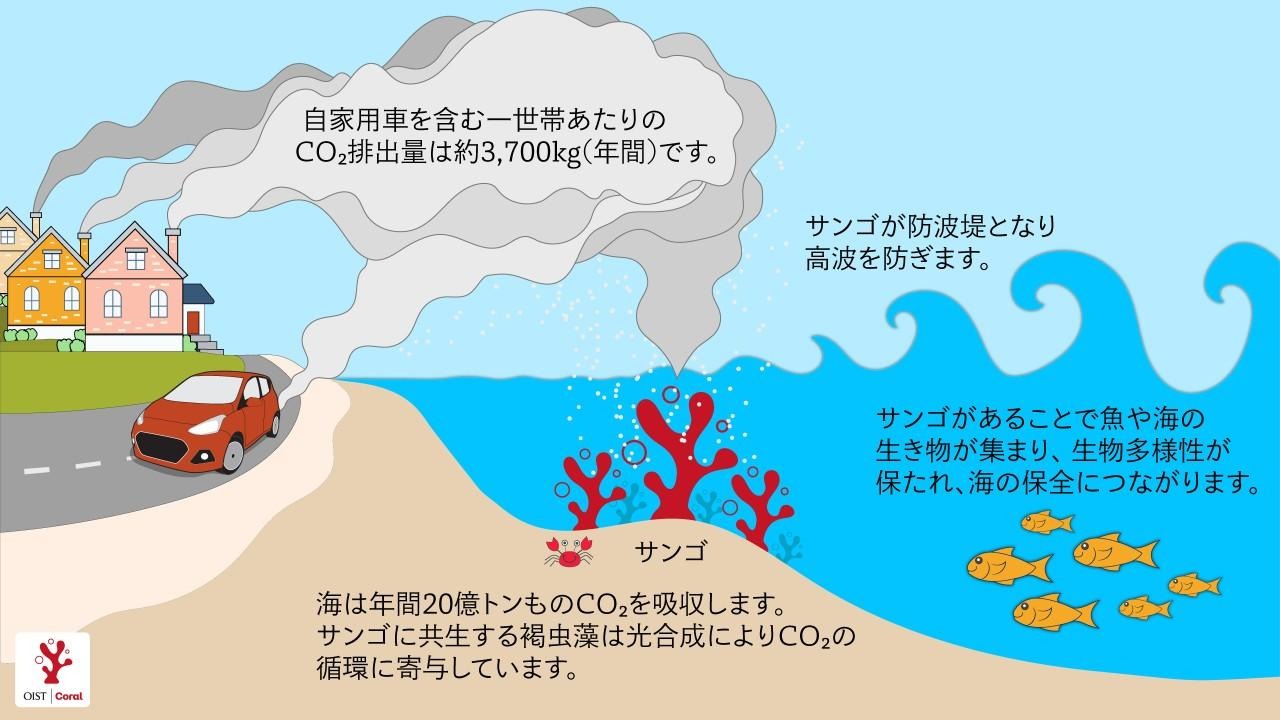
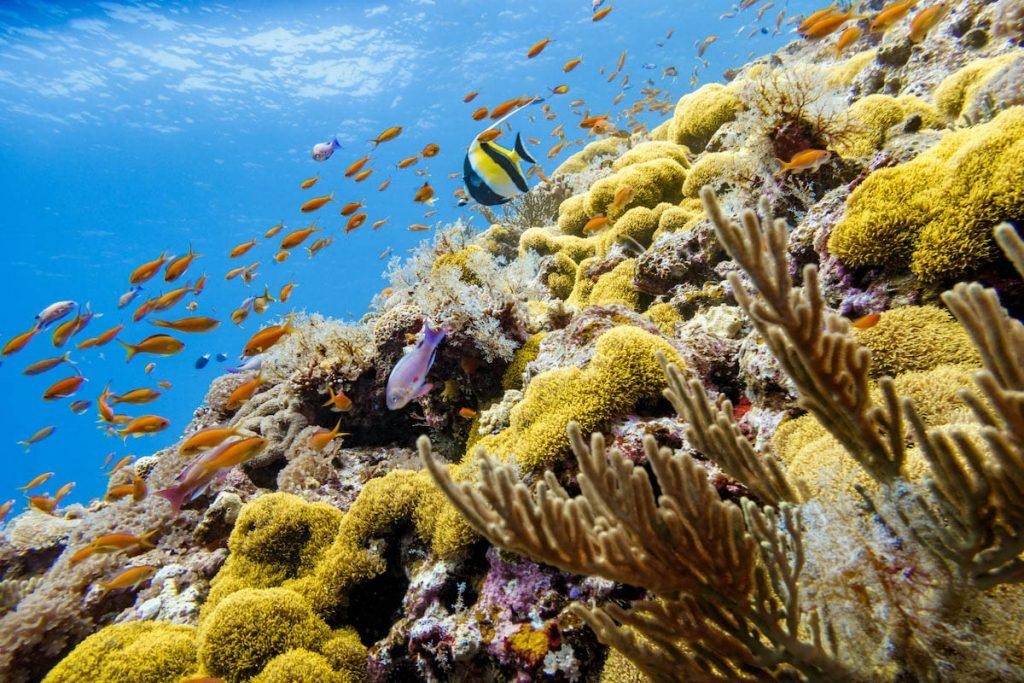
Okinawa’s islands are surrounded by ancient coral reefs that contain 400 of the 800 known species of coral in the world. These sea forests act as homes for 30% of all marine species.
In addition to the role they play in supporting marine life, coral reefs also help humans. Coral reefs act as barriers that reduce the impact of high waves during typhoons, tsunamis, and other storms. One of the marine organisms that lives on coral reefs is also an important component in the fight against climate change because it absorbs CO₂.
As coral reefs are extremely important, one of the main things that you can do to protect them is to wear coral-safe sunscreen. An estimated 14,000 tons of sunscreen enters the ocean every year and harms marine wildlife, including coral reefs. Use lotion-type sunscreens that are non-nano (ノンナの) and do not contain oxybenzone and octinoxate.
Another way in which you can protect coral is by not touching it. As tempting as it may be to touch the captivating coral reefs, corals belong to the same kingdom as jellyfish and are capable of stinging. They are also fragile, and careless touching can cause damage to the reef. For your safety and the coral reefs’, please be extremely careful to look and not touch.
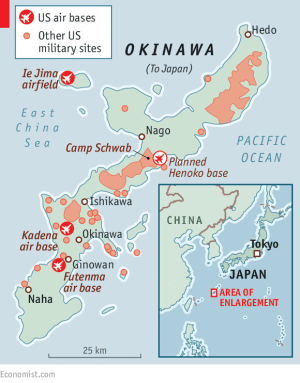
The United States has around 30,000 active duty military personnel deployed in Okinawa. Making up just 1% of the landmass of Japan, Okinawa Prefecture hosts 70% of the U.S. military bases that are exclusively used by the U.S. (and not in conjunction with the Japanese Self Defense Forces). Following World War II, Okinawa was a U.S. territory for 27 years. During this time, the official currency of Okinawa was the U.S. dollar, and Okinawans were required to use a passport to travel to mainland Japan. In 1972, Okinawa reverted to Japanese control. As part of this negotiation, the U.S. was allowed to retain their military presence in Okinawa, or as Americans nicknamed it, the “keystone of the Pacific.”
Many Okinawans have voiced opposition to the bases for decades, and there is an ongoing struggle to remove the bases from Okinawa. Okinawa is currently the poorest of Japan’s 47 prefectures, and while the bases formed a vital part of Okinawa’s post-war economy, these large occupied plots of land are largely inaccessible to the public. Okinawa has devised several economic development plans to replace the bases, but the necessary cooperation and monetary support from mainland Japan has rendered many of these plans irrelevant.
Most JETs will have limited interactions with the U.S. Military. For those living on outer islands, your interactions will be even further limited as there are no military bases on any of the outer islands. For those living on the main island, it’s much more likely to hear them than see them as they conduct air training throughout the day. Other daily interactions tend to be limited to seeing bases or service members in passing. Many military personnel and their families do most of their shopping and attend school on base. When it comes to off base activities, cities such as Yomitan, Chatan, Ginowan, and Okinawa City are popular destinations. Okinawa City, particularly around Gate 2, is a well known hangout among military personnel.
Note that, as a foreigner, you may unfortunately be mistaken for military personnel (regardless of your nationality).
Base Access
While it is possible to access the bases, JETs–even Americans–are not automatically granted access. Here are some situations in which you can access the base:
Special Events
During special events, the bases offer open access to everyone. Some of these events include concerts by famous musicians and festivals. During these events, please be prepared to show your Residence Card as a form of ID.
Friends with Access
Some military personnel have a base pass that allows others to enter with them. If you do enter the base with a friend, please be respectful and follow the rules of the base.
Base Pass
While rare, it is possible to apply and receive your own civilian pass.
Note: If you do enter the base, you can access most of the shopping centers and restaurants. The exception to this access are any of the commissaries and supermarkets. The prices at the commissaries and supermarkets are subsidized by the U.S. government, making them much cheaper than even prices in America itself.
English Usage
While there are many opportunities to interact with native speakers of English, most Okinawans do not have a high level of English. In areas surrounding the bases and where military personnel and their families visit, many stores employ staff members with a basic understanding of English that allows them to perform all their job functions. For more information on languages in Okinawa, please check our page on Language.
Further Reading
Okinawa under heavy US base burden, 50 years after the return:
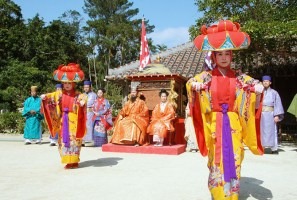
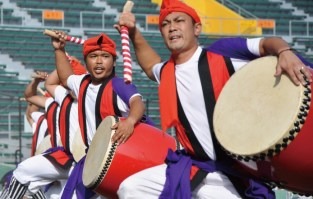
People imagine Japan to be culturally homogeneous. In some ways, this is true. However, Okinawa is much more culturally diverse than mainland Japan for several reasons.
First, the Ryukyu Kingdom’s prosperity was a product of international trade whereas Japan maintained a strict isolationist policy for several centuries. One off-shoot of the Ryukyu Kingdom’s international relations is that Okinawans are historically more genetically diverse than Japanese. In fact, Japanese people often superficially mistake Okinawans on mainland Japan as Taiwanese or Filipino individuals.
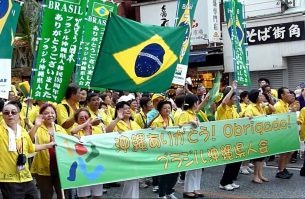
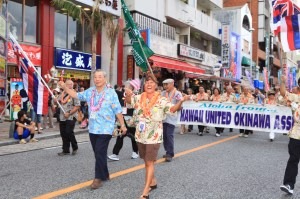
Second, for various reasons, Okinawa had the highest emigration rate of Japan’s prefectures in the last century. Recently, many second or third generation Okinawans have returned to the island from their homes in South America, Asia, Hawaii, and so on, creating a chanpuru (mix) of cultures in the small prefecture. Do you want Argentinean food? Peruvian food? Mexican or Indian or Thai food? You can find restaurants serving all of these on the Okinawa mainland. Do you like salsa dancing, want to practice your German or Spanish? No problem, there are several Latin dance clubs and foreign language speaking communities here.
Third, close contact with American culture due to 27 years of occupation and continued military presence has exposed many Okinawans to a large dose of American culture. (Okinawa was American territory until 1972 – Okinawans needed a passport to go to mainland Japan!) For example, Okinawan vocabulary boasts a higher rate of English loan words as compared to mainland Japanese. Okinawans may know more about US holidays or foods than mainland Japanese people would as bases are frequently opened to the public for holiday celebrations, and American oriented shops sell popular items like apple pie and turkey on Thanksgiving.