Okinawa’s Wildlife

Overview

From giant “murder hornets” to giant centipedes, many people are aware of the more infamous, more dangerous insects that call Japan home. Luckily, Okinawa does not have many of these! It is very unlikely that JETs living on the main island will ever see or have to deal with either the giant “murder hornet” or the giant centipede. However, Okinawa is still a tropical island, coming with its own diverse ecosystem.

Okinawa is home to many creatures–some of which are potentially harmful to humans and some of which are not. This page will cover some of the more common horrors and wonders of the Okinawan wilderness with the intent to increase awareness, not fear.
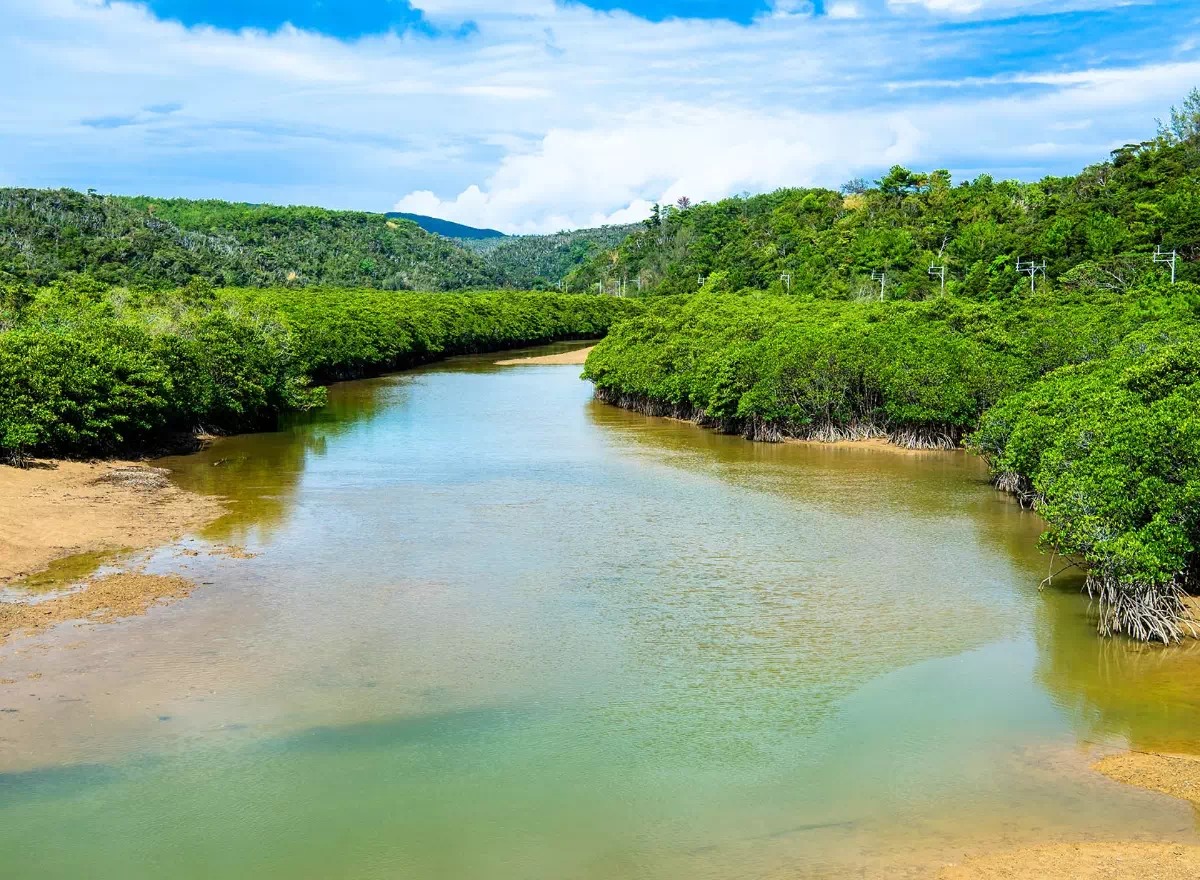
Photo by Okinawa Convention & Visitors Bureau via Visit Okinawa Japan

Forest Wildlife

While not as well known as Okinawa’s beaches, Okinawa has several designated national parks that are equally as stunning. In the northern half of Okinawa’s main island is Yanbaru National Park, a UNESCO World Heritage Site, and Iriomote-Ishigaki National Park spans two of the outer islands. Both parks possess wonderful hiking trails and a variety of wildlife. The Iriomote-Ishigaki National Park boasts Japan’s largest mangrove forest–an impressive sight to see with the trees’ distinct roots rising out of the water.

Mongoose (マングース)

The mongoose, a small, carnivorous mammal, was introduced to Okinawa in the 1910s with the intention that they would control the habu population. However, mongoose are diurnal in comparison to the nocturnal habu, and this difference in lifestyles ultimately resulted in failure of the original intention. While mongoose have a special mutation that grants them immunity from habu venom and allows them to eat these snakes, they are just as content to eat various birds, causing several native bird species to become endangered.
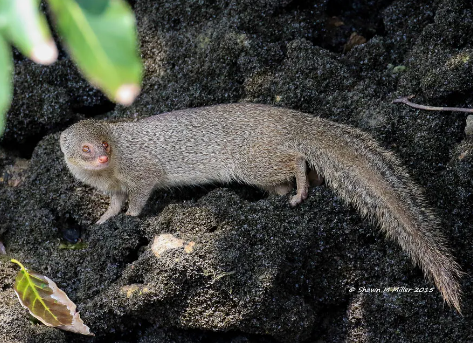
While mongoose are not dangerous to humans, they often make the poor decision to cross the street without looking both ways. When driving by forested areas, please be aware that they may pop out suddenly.

Photo by Shawn Miller via Okinawa Nature Photography

Okinawan rail (Yanbaru rail/Yanbaru kuina ヤンバルクイナ)

The Okinawan rail is an endangered bird endemic to the Ryukyu Islands. This living national treasure may be flightless but makes up for this shortcoming with its speed. Adult rails have distinct red eyes and legs.

While not dangerous to humans, these birds are a legally protected species. The bird is often prey for mongoose and snakes. They also cross the street and become victims on the side of the road. For more information, read What to do if you see an injured or dead wild animal | Yambaru Wildlife Conservation Center.
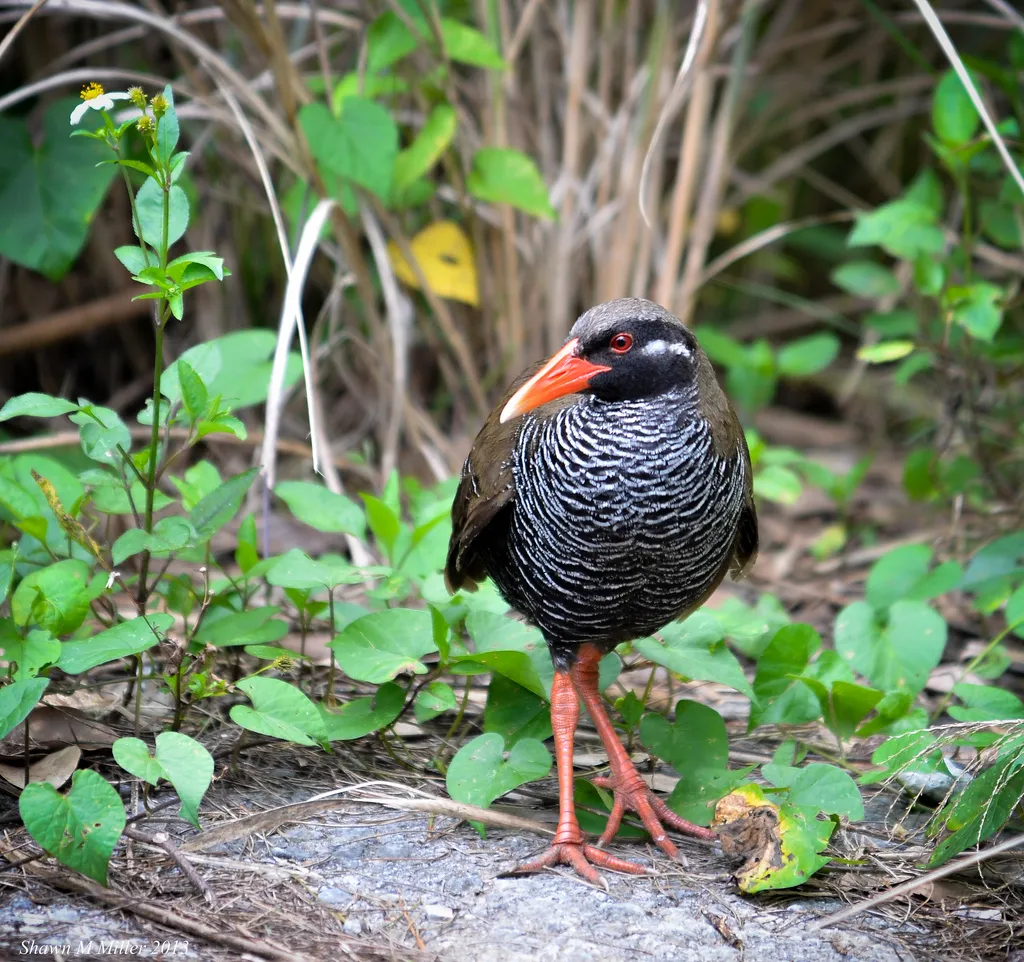
Photo by Shawn Miller via Okinawa Nature Photography

Yanbaru long-armed scarab beetle (yanbaru te naga kogane やんばるテナガコガネ)
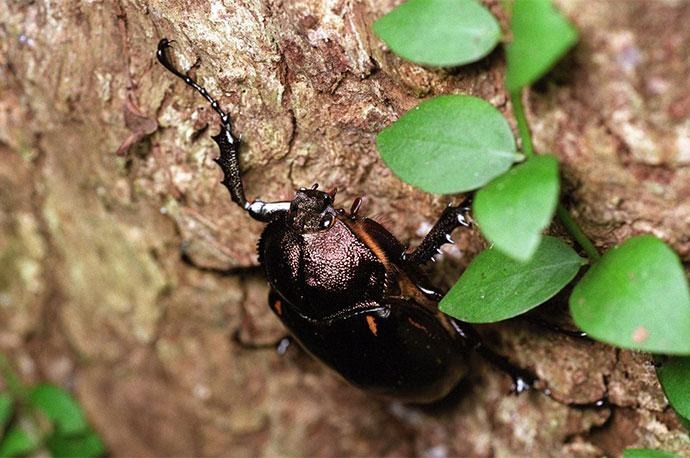
The largest beetle in Japan with a total length of 13-14 cm, the Yanbaru long-armed scarab beetle is extremely rare. Upon its discovery in the 1980s, this beetle was already thought to be near extinction, making it an endangered species.

Photo by Okinawa Ikimono Lab

Snakes (hebi へび 蛇; In Okinawan: habu ハブ)

While there are many types of snakes in Okinawa, only a few species are venomous to humans. Of these, the most commonly sighted are the Okinawan habu (golden habu), the Taiwanese habu (brown-spotted pit viper), and the princess habu (hime habu). Although this may make it seem as if Okinawa is teeming with snakes, it is not. People living in urban areas are far more likely to encounter a habu at an izakaya–habu shu, an alcohol made with a fermented habu, is considered a prefectural specialty–than they are in their daily life. Those living in more rural areas may see an occasional snake, but should not be overly worried about the danger.

Okinawan Habu (Golden Habu)

This endemic snake is the largest and most venomous of all the snakes on the island. Identifiable through its golden color and slender body, the Okinawan habu is often found on rock walls–such as those in caves or tombs–and near tree lines–such as those near parks and farms.

According to reports from the Okinawa Institute of Science and Technology (OIST), around 50 bites from this snake are reported every year. While the venom from the Okinawan habu is hemotoxic, meaning that it destroys blood cells and tissues, immediate treatment has resulted in a less than 1% fatality rate.

For more information on the venom of the Okinawan habu, please read Mysteries of Okinawan Habu Venom Decoded | Okinawa Institute of Science and Technology OIST.
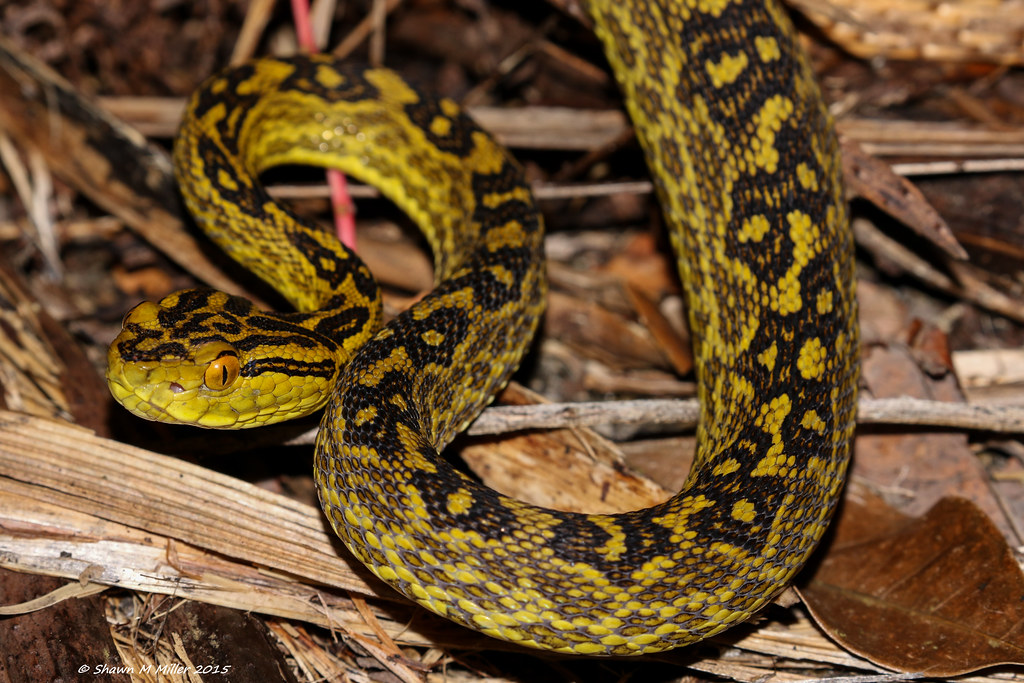
Photo by Shawn Miller via Okinawa Nature Photography

Taiwanese habu (brown-spotted pit viper)

Accidentally released into Okinawa’s wilderness during the 1970s, the Taiwanese habu is grayish-brown in color with large, distinct splotches and a triangular head.
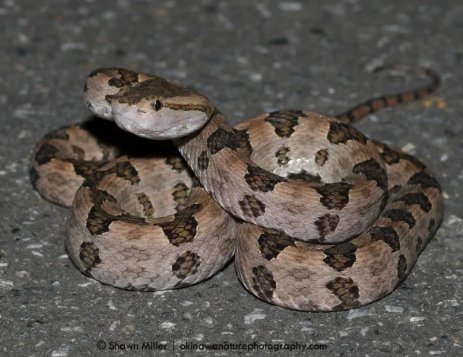
Similar to the Okinawan habu, these snakes are often found on rock walls, in caves, and near trees.

While the Taiwanese habu is less venomous than the Okinawan habu, the Taiwanese habu is aggressive and will strike.

Photo by Shawn Miller via Okinawa Nature Photography

Princess habu (hime habu)

The smallest and most commonly spotted habu in Okinawa, the princess habu ranges in size from 40 to 80 centimeters. Unlike the previous two habu, the princess habu prefers wet places, such as ponds, ditches, creeks, and rivers.
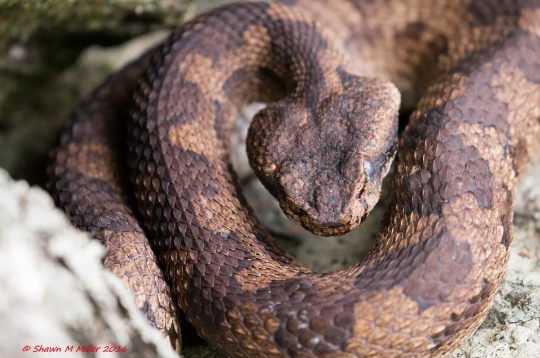
Photo by Shawn Miller via Okinawa Nature Photography

Snake Bite Treatment

Snake bites are not a serious area of concern for most OkiJETs. Those working in fields, such as farmers, account for the majority of bites. Only 5% of habu bites occur in mountainous regions.

  1. If bitten, identify the snake.
    • Remember that not all snakes are habu. Being able to give a visual description of the snake can aid in your treatment. However, do not attempt to catch the snake as it may try to bite you again.
  2. Seek medical attention.
    • If you are traveling with companions, have them escort you slowly to the hospital, as running can cause the venom to spread faster.
    • If you are alone, call 119 as soon as you can. Wrap a cloth gently around the upper part of the extremity closer to your heart than the bite.

Reminders

Here are a few bullet points to remember when it comes to snakes in Japan:

  • Nocturnal Creatures
    • Habu are nocturnal, so you are unlikely to see them during the day. If you enjoy exercising at night and live in a rural area, bring a flashlight and wear protective clothing on your legs.
  • Leave them alone.
    • As with most snakes, habu are not interested in you. If you see a habu, give it a wide berth. Snakes are more likely to attack when they feel threatened.
  • Not fatal
    • Habu bites have a fatality rate of less than 1%, meaning that you do not need to fear them. Many Okinawans living in urban areas have never encountered one in the wild.

For detailed information regarding snakes, please read the official pamphlet provided by the Okinawan government: ハブに関する普及啓発_リーフレット英語 (okinawa.lg.jp)

Spiders (kumo くも)

Spiders are, unfortunately, a part of daily life in Japan regardless of where you live. Besides occasionally making one’s heart race, spiders in Japan are relatively harmless to humans. The most common spiders that you will encounter are tiny jumping spiders. If you are (un)lucky, you may encounter some of the larger species.

Golden orb weaver (joro spider joro gumo ジョロウグモ)

If you are familiar with Japanese folklore, you may have heard of the golden orb weaver who is often depicted as a woman that entraps and feasts on men. However, the actual spider prefers to feast on insects that it traps in its large web.
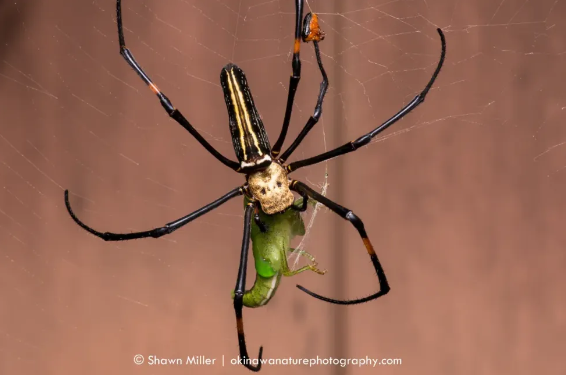
These spiders can be commonly seen hanging between trees and bushes. While these spiders are timid, they can bite when threatened. Bites can be painful, but do not cause lasting damage to humans.

Photo by Shawn Miller via Okinawa Nature Photography

Huntsman spider (ashidaka gumo アシダカグモ)

The huntsman spider is perhaps one of the more well-known spiders of Okinawa. Their bodies are more flat than the average spider, and their legs are adapted to clinging on to various surfaces–even a speeding car can’t shake them! Their fame tends to come from their mobility and size; huntsman spiders can both run and jump with tremendous speed. At their largest, the huntsman spider can be as long as a human fist, though their size doesn’t always help make them visible, so be sure to check shoes and other dark places carefully before exposing your appendages.

Although huntsman spiders are poisonous, their venom is relatively harmless. Pain, swelling, and skin irritation are common symptoms, as is the typical “ewewewew” reaction upon seeing one.

Protip: Spraying a huntsman spider (or many insects, for that matter) with a mixture of either soap and water or fabric softener and water works wonders for slowing them down.
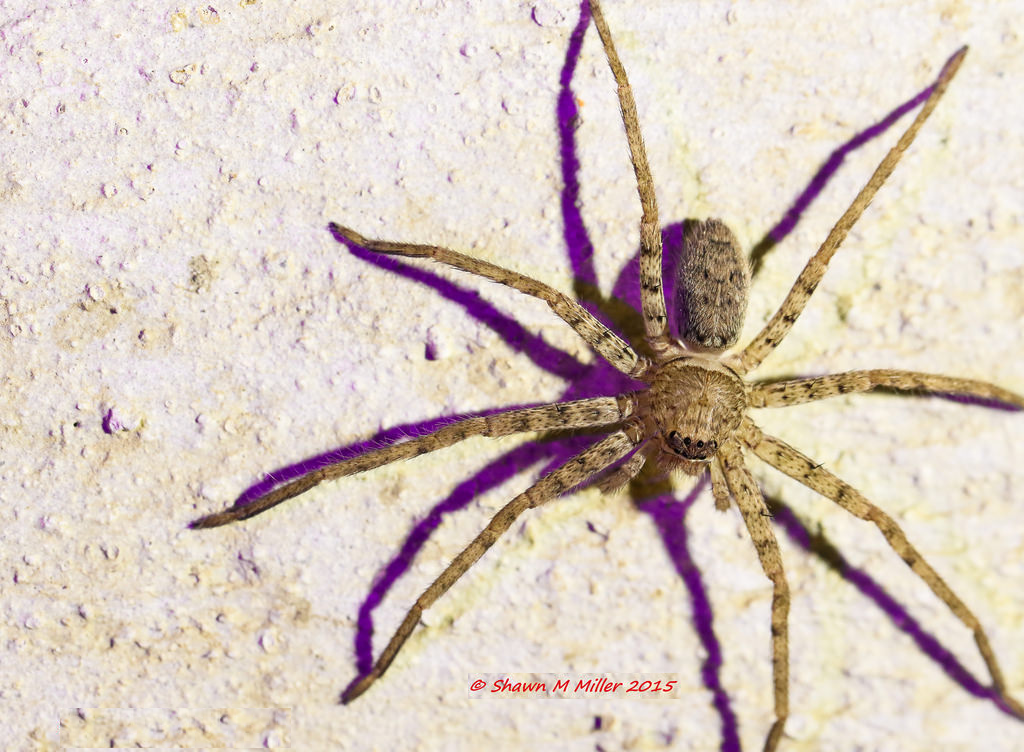
Photo by Shawn Miller via Okinawa Nature Photography

Marine Wildlife

Part of Okinawa’s unique charm stems from its deep connection with the ocean. As such, Okinawans have a deep respect for the ocean and its many mysteries. We recommend that all OkiJETs visit the famous Churaumi Aquarium during their time here to learn more about the wildlife inhabiting the waters surrounding the many islands. We also recommend trying some of the many marine sports available, such as swimming, snorkeling, boating, and scuba diving. While enjoying the ocean, please be mindful of the following wildlife:

Cone Snails (imogai イモガイ)

It’s said that every rose has its thorns, and the same is true for cone snails. The shells of these snails are adored by collectors and beachcombers alike due to their varying patterns. With over 900 different species, it’s highly likely you’ll encounter one at some point during your stay.

All species are known to be venomous, and the chemical composition of these venoms is as varied as their shell designs. Likewise, the venom’s potency varies from species to species. Some of the smaller species aren’t nearly as deadly, and their bites aren’t as painful. One of the larger species is often referred to as the “cigarette snail”, implying that, after being stung, the victim only has enough time to smoke a cigarette before their life, too, is extinguished.

  • If stung, seek medical attention as quickly as possible. To reduce your risk of being stung, carry a stick while looking for shells, using it to prod the insides of any shell you’re thinking of collecting.

Coral Reefs (sango sho さんごしょう サンゴ礁)

Okinawa’s islands are surrounded by ancient coral reefs that contain 400 of the 800 known species of coral in the world. These sea forests act as homes for 30% of all marine species.

In addition to the role they play in supporting marine life, coral reefs also help humans. Coral reefs act as barriers that reduce the impact of high waves during typhoons, tsunamis, and other storms. One of the marine organisms that lives on coral reefs is also an important component in the fight against climate change because it absorbs CO₂.
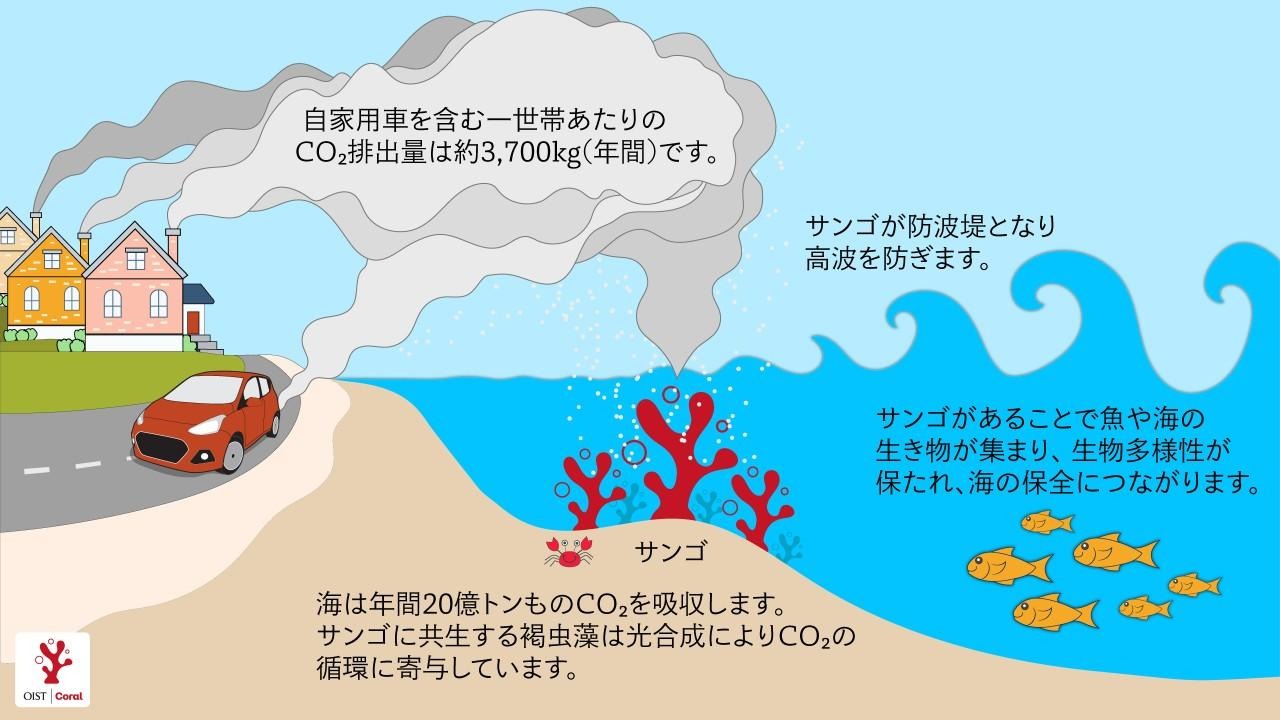
Photo by Okinawa Institute of Science and Technology

As coral reefs are extremely important, one of the main things that you can do to protect them is to wear coral-safe sunscreen. An estimated 14,000 tons of sunscreen enters the ocean every year and harms marine wildlife, including coral reefs. Use lotion-type sunscreens that are non-nano (ノンナの) and do not contain oxybenzone and octinoxate.

Another way in which you can protect coral is by not touching it. As tempting as it may be to touch the captivating coral reefs, corals belong to the same kingdom as jellyfish and are capable of stinging. They are also fragile, and careless touching can cause damage to the reef. For your safety and the coral reefs’, please be extremely careful to look and not touch.
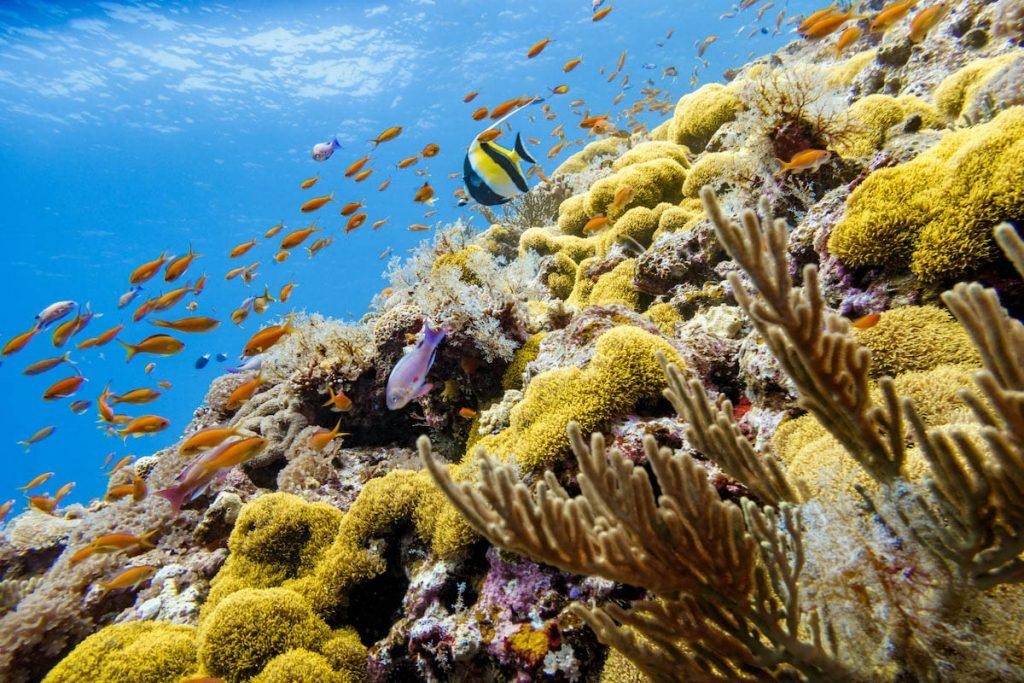
Photo by Okinawa Convention & Visitors Bureau via Visit Okinawa Japan

Further Readings

For more on Okinawa’s wildlife, check Shawn Miller’s website https://okinawanaturephotography.com/.

For more regarding Okinawa`s conservation efforts, check Research News | Okinawa Institute of Science and Technology OIST.
U.S. Military Presence

Overview

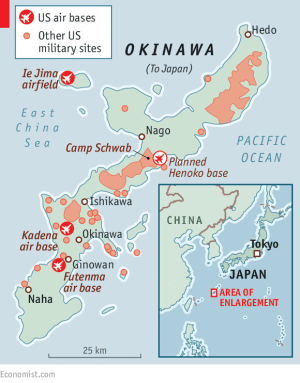
The United States has around 30,000 active duty military personnel deployed in Okinawa. Making up just 1% of the landmass of Japan, Okinawa Prefecture hosts 70% of the U.S. military bases that are exclusively used by the U.S. (and not in conjunction with the Japanese Self Defense Forces). Following World War II, Okinawa was a U.S. territory for 27 years. During this time, the official currency of Okinawa was the U.S. dollar, and Okinawans were required to use a passport to travel to mainland Japan. In 1972, Okinawa reverted to Japanese control. As part of this negotiation, the U.S. was allowed to retain their military presence in Okinawa, or as Americans nicknamed it, the “keystone of the Pacific.”

Many Okinawans have voiced opposition to the bases for decades, and there is an ongoing struggle to remove the bases from Okinawa. Okinawa is currently the poorest of Japan’s 47 prefectures, and while the bases formed a vital part of Okinawa’s post-war economy, these large occupied plots of land are largely inaccessible to the public. Okinawa has devised several economic development plans to replace the bases, but the necessary cooperation and monetary support from mainland Japan has rendered many of these plans irrelevant.

For further information regarding the U.S. Military, please check here: http://www.globalsecurity.org/military/facility/okinawa.htm

Military Interactions

Most JETs will have limited interactions with the U.S. Military. For those living on outer islands, your interactions will be even further limited as there are no military bases on any of the outer islands. For those living on the main island, it’s much more likely to hear them than see them as they conduct air training throughout the day. Other daily interactions tend to be limited to seeing bases or service members in passing. Many military personnel and their families do most of their shopping and attend school on base. When it comes to off base activities, cities such as Yomitan, Chatan, Ginowan, and Okinawa City are popular destinations. Okinawa City, particularly around Gate 2, is a well known hangout among military personnel.

Note that, as a foreigner, you may unfortunately be mistaken for military personnel (regardless of your nationality).

Base Access

While it is possible to access the bases, JETs–even Americans–are not automatically granted access. Here are some situations in which you can access the base:

Special Events

  • During special events, the bases offer open access to everyone. Some of these events include concerts by famous musicians and festivals. During these events, please be prepared to show your Residence Card as a form of ID.

Friends with Access

  • Some military personnel have a base pass that allows others to enter with them. If you do enter the base with a friend, please be respectful and follow the rules of the base.

Base Pass

  • While rare, it is possible to apply and receive your own civilian pass.

Note: If you do enter the base, you can access most of the shopping centers and restaurants. The exception to this access are any of the commissaries and supermarkets. The prices at the commissaries and supermarkets are subsidized by the U.S. government, making them much cheaper than even prices in America itself.

English Usage

While there are many opportunities to interact with native speakers of English, most Okinawans do not have a high level of English. In areas surrounding the bases and where military personnel and their families visit, many stores employ staff members with a basic understanding of English that allows them to perform all their job functions. For more information on languages in Okinawa, please check our page on Language.

Further Reading

Okinawa under heavy US base burden, 50 years after the return:

A Guide to Battle Sites and Military Bases in Okinawa City:

https://www.city.okinawa.okinawa.jp/documents/946/aguidetobattlesitesandmilitarybases.pdf

Maps of U.S. Military Bases in Okinawa:

Cultural Diversity

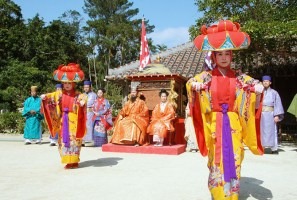
People imagine Japan to be culturally homogeneous. In some ways, this is true. However, Okinawa is much more culturally diverse than mainland Japan for several reasons.

First, the Ryukyu Kingdom’s prosperity was a product of international trade whereas Japan maintained a strict isolationist policy for several centuries. One off-shoot of the Ryukyu Kingdom’s international relations is that Okinawans are historically more genetically diverse than Japanese. In fact, Japanese people often superficially mistake Okinawans on mainland Japan as Taiwanese or Filipino individuals.

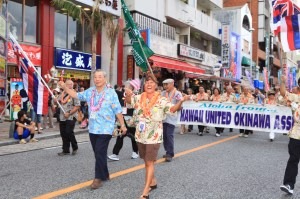
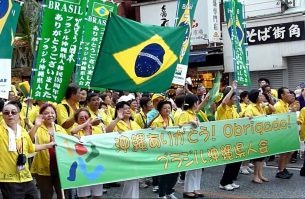
Second, for various reasons, Okinawa had the highest emigration rate of Japan’s prefectures in the last century. Recently, many second or third generation Okinawans have returned to the island from their homes in South America, Asia, Hawaii, and so on, creating a chanpuru (mix) of cultures in the small prefecture. Do you want Argentinean food? Peruvian food? Mexican or Indian or Thai food? You can find restaurants serving all of these on the Okinawa mainland. Do you like salsa dancing, want to practice your German or Spanish? No problem, there are several Latin dance clubs and foreign language speaking communities here.

Third, close contact with American culture due to 27 years of occupation and continued military presence has exposed many Okinawans to a large dose of American culture. (Okinawa was American territory until 1972 – Okinawans needed a passport to go to mainland Japan!) For example, Okinawan vocabulary boasts a higher rate of English loan words as compared to mainland Japanese. Okinawans may know more about US holidays or foods than mainland Japanese people would as bases are frequently opened to the public for holiday celebrations, and American oriented shops sell popular items like apple pie and turkey on Thanksgiving.

Image credit: 1, 2, 3, 4, 5, 6

Transportation

Overview

While small, Okinawa can be surprisingly difficult to navigate. Because of the hilly terrain, many Okinawans favor driving as their main mode of transportation. While many JETs also favor driving and do eventually end up buying a car, it is still possible to get around without one. JETs living in the Naha area can take advantage of the Yui Rail Monorail, the only train system in Okinawa. JETs in other regions may find they have close access to one of Okinawa’s many bus routes.

Driving

Unlike mainland Japan, Okinawa is designed for car access. Parking lots and garages are readily accessible in most areas. Most apartment buildings offer parking spaces for their residents. In addition to regular streets, Okinawa has several toll roads with rest stops on the side.

International Driver’s Permit (IDP)

Before moving to Okinawa, we recommend obtaining an IDP in your home country. An IDP allows you to drive in Japan for the duration of one year.

  • For those that wish to continue to drive past this one year, you will need to convert your home country’s driver’s license to a Japanese driver’s license. For more information about the conversion process, please read the page on Japanese Driver’s Licenses.

Cars

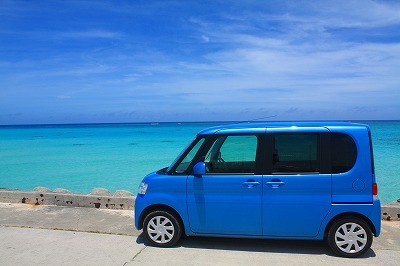
There are two types of cars you can own: a yellow-license plate (kei) car or a white-license plate car.

  • As part of owning a car, you will need to pay for a shaken, a mandatory vehicle safety inspection.

Learn more about having a car at Cars in Japan.

Monorail System

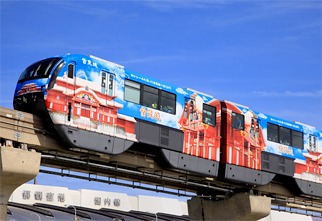
For JETs in Naha and Urasoe, the Yui Rail Monorail offers quick and easy travel. Currently, the monorail has a Down Line departing from Naha Airport and an Up Line departing from Tedako-Uranishi in Urasoe. These lines service a total of 19 stations over 17 kilometers (11 miles).

Ticket Fares

Similarly to trains in the rest of Japan, the ticket fare depends on the distance of travel.

Tickets can be easily purchased from the entrance of any of the stations. All ticket machines have several language options, including English, for easy navigation.

  • For frequent users, an OKICA (prepaid IC card) is available for purchase. Cards can be easily reloaded at the ticket vending machines. These cards can also be used to pay for bus travel.
  • Other train passes, such as Suica or Pasmo, can also be used to pay for the monorail.

Sightseeing

The monorail is a great way to travel to many sightseeing spots, such as Kokusai-dori (International Street) and Shuri Castle.

  • Parking is available at or near most stations. Rental bicycles are also available at some stations.

Daily Life

For those traveling to Naha Airport, the monorail is a great option. Depending on how busy it is, it can take around an hour to get to the airport from the 19th station.

Because many use the monorail to travel to and from work, morning rush hour from 7-9 A.M. can be quite busy. Similarly, 3-7 P.M. can get quite busy as people return home and run errands. On the weekends, rides can be quite crowded depending on the stretch. Expect more traffic as the monorail approaches downtown Naha and the airport.

  • For those that ride the monorail frequently, bicycle parking is available at most stations. If you choose to use this parking, please be sure to lock up your bicycle as theft is still a possibility.
  • If you choose to use the monorail at night, please be aware that the last departures from Station 1 (Down Line) and Station 19 (Up Line) leave at 11:30 P.M.

To learn more about the monorail and view the timetable, please check the official Yui Rail Official Website.

Bus System

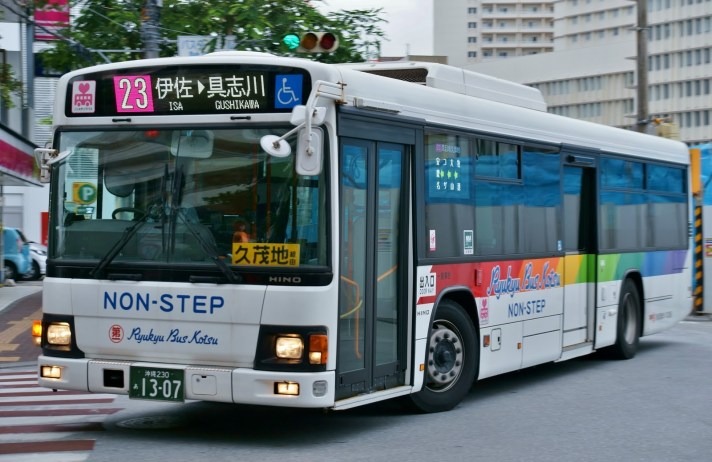
While perhaps not the quickest way to travel in Okinawa, the bus system is extensive in the southern and middle areas of Okinawa. Most buses also stop near the popular sightseeing and tourist sites. That being said, buses in Okinawa are notorious for being on “island time”—a.k.a. almost always late. Those who plan accordingly, however, can travel by bus fairly easily.

Ticket Fares

As with the monorail, the ticket fair depends on the distance of travel. Using Google Maps, you can get a close estimate of the price for your trip beforehand. On the bus, there is a fare board that displays the fares.

  • Frequent riders should consider getting a Suica or OKICA card. Cards can be reloaded when deboarding the bus or at monorail stations.
    • Note that Suica, a mainland IC card, may not work on all buses. Bus stops will display this information, so please check if you plan on paying this way.
  • Occasional riders can grab a ticket when boarding the bus. When exiting, pay at the front.

Routes

There are many routes in Okinawa, with several that stretch from Naha to Nago and stop near famous sightseeing spots.

  • While many of these routes only stop at major bus terminals in the larger cities, many smaller towns and villages also have a community bus system that services that town or village. These buses are often themed to the specific village or town, making them stand out.

For the official information on buses in Okinawa, check out Okinawa Bus Ltd.

See Bus System for an in depth explanation of routes and more resources.

Outer-Island Access

As with the main island, many living on an outer island prefer to own a vehicle and drive for ease of access. Some of the closer islands are connected via bridge to the main island, meaning that you can drive to them. For those islands that are further out, access is limited to taking a ferry or an airplane. For specific information on your destination, please check out the Island Guides.

Ferries

There are several ports of access from the main island.

  • Naha Tomari Port
    • Services the Kerama Islands, Aguni Island, Kume Island, Tonaki Island, Kita-Daito, and Minami Daito
  • Motobu Port
    • Services Ie Island, the Amami Islands, Okinoerabu Island, and Kagoshima Prefecture
  • Toguchi Port
    • Services Minna Island
  • Unten Port
    • Services Iheya Island and Izena Island
  • Heshikiya Port
    • Services Tsuken Island
  • Azama Port
    • Services Kudaka Island

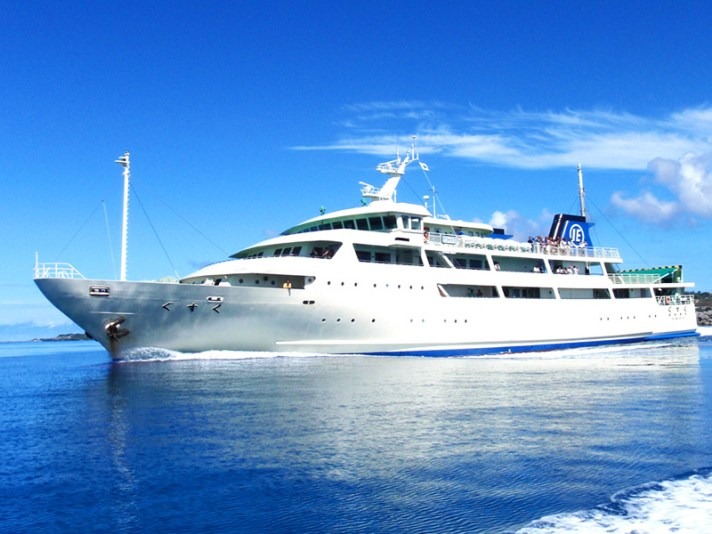
Depending on the destination, multiple ferries may be available. A standard ferry can take longer to bring you to your destination but can offer more sightseeing opportunities. For those who wish to arrive quickly, high-speed ferries that arrive in half the time may be available.

Larger ferries tend to be fairly spacious and comfortable with both indoor and outdoor seating options available. These ferries also include televisions for entertainment and on-board bathrooms.

Airplanes

While more expensive than a ferry, airplanes are the fastest option. Unlike ferries which can make multiple crossings per day, flights may be limited with some islands only being visited a few times each week.

  • Islands that can only be reached via airplane include the Miyako Islands and the Yaeyama Islands.

For more information on flights, please read Airport Routes and Airlines.

Image credit: 1, 2, 3, 4

Weather

Overview

Located between the East China Sea, the Pacific Ocean, and the Philippine Sea are the islands of Okinawa Prefecture. With a subtropical climate, Okinawa has an average temperature of 22°C (72°F) with mid to high humidity levels. In the summer months, the combination of high humidity with temperatures around 30°C (88°F) make for miserably hot weather. In the winter months, the temperature does not usually fall below 10°C (50°F). However, it can feel fairly cold because of strong northern winds whipping over the ocean and frequent cloudy days.

Hot Weather Season

Depending on the climate to which you are accustomed, the weather in Okinawa can be an uncomfortable adjustment. While you may find that the heat does not bother you, the high humidity levels can be challenging.

July and August

  • The hottest months of the year, July and August usually average 32°C (90°F) with humidity levels of 80-90%.
  • While July and August are usually the hottest months of the year, expect hot, humid weather from May through October.

Air Conditioning

  • In order to combat the heat, most apartments are equipped with an AC unit. If you find yourself having to buy a new AC unit, it may cost around ¥50,000 or more.
  • In addition to your apartment, schools generally have air conditioning, although they may limit the usage to days with extremely high temperatures. Even then, cooling might be limited to certain rooms.

Clothing

  • During summer, many Okinawans choose to wear kariyushi shirts. These shirts can be easily obtained in most department stores in Okinawa, though they can be a little expensive.
  • For further recommendations and information regarding clothing, please check Pre-Arrival.

For further information about preparing for summer, please visit this page: Combating Summer.

Cold Weather Season

As buildings are designed to withstand the heat of summer, the chill of winter can penetrate buildings quite easily. The strong winds of winter also contribute to a sense of chilliness that is not necessarily reflected in the air temperature. While Okinawa may not experience snow or sleet, even those from countries with proper winters may find this season to be colder than they expect.

January and February

  • The coldest months of the year, January and February usually average 17°C (62°F) with humidity levels of 60-70%.

Heating

  • Central heating is generally nonexistent. Many JETs invest in a small electric heater to use at home.
  • While some workplaces may also have a heater, the majority will not. Be prepared to dress warmly.

Dryness

  • While the winter months may see some rain, the humidity will decrease, causing both dry skin and coughing as a result of the dry air.

In Between Weather Season

Unlike the majority of Japan, Okinawa does not have well-defined autumn and spring seasons. These seasons tend to be unpredictable in both timing and weather. While autumn generally falls in November and December, it can start as early as October. Spring is much the same–sometimes starting as early as February. Both seasons are prone to changeable weather where the day may start sunny before quickly changing to rain. This change in weather can also be seen between areas and cities–an occurrence Okinawans describe with the word katabui (カタブイ).

November and December

  • In between the mugginess of summer and the cold winds of winter, Okinawa experiences a short autumn. Temperatures in these months sit in the low twenties (around 70°F) with humidity in the low 70% range.

March and April

  • After a cold winter comes a short spring. Much like autumn, spring temperatures sit in the low twenties (around 70°F); however, spring tends to be a bit more humid at around 80%.

Clothing

  • During these seasons, layers are helpful. It is not uncommon to see a mix of lightweight windbreakers/sweaters and short-sleeved shirts. For specific recommendations, please check Pre-Arrival.

Rainy Season

A season characterized by persistent clouds and rain showers, tsuyu (つゆ 梅雨; also pronounced as baiu) starts early in Okinawa. While many lament having to shelter inside, the rainy season is the last break in weather before a long and intense summer.

May and June

  • Lasting around a month, tsuyu generally falls between May and June each year. Temperatures for these months fall between 24°C and 26°C (75°F and 80°F) with humidity levels reaching as high as 90%.

Preparation

  • Many of the tips discussed in Combating Summer also apply to the rainy season. Before leaving your apartment for the day, be cautious about leaving any doors and windows open. All supermarkets and drugstores sell dehumidifiers by the pack. You may find that some of your windows/doors can collect condensation. Placing a towel or tray under such places can help to prevent water damage to your apartment.

Typhoon Season

Typhoons are tropical storms that form in the ocean and can make landfall. While typhoons can be quite severe, the majority of typhoons tend to be weak and/or never approach land.

May through September

  • Some typhoons approach as early as May; however, most typhoons come during the months of June, July, and August.

Weather

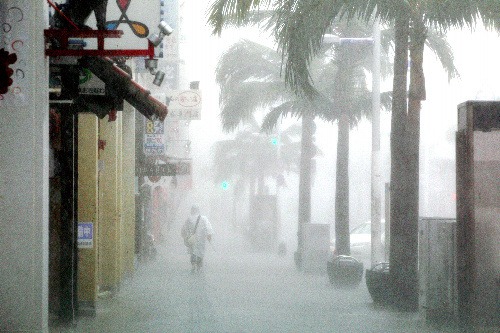
  • During a typhoon, the temperature does not fluctuate much from the norm, but, with the rain, the humidity does increase to that of 90 to 100%. Additionally, typhoons can cause power outages, meaning that you may find yourself without the use of air conditioning and fans. Try to keep yourself as cool and hydrated as possible during times of high humidity.

For further information about typhoon preparations, please visit this page: Typhoon Preparation.

Image credit: 1, 2