Language

THE MAIN LANGUAGE

Standard Japanese is the language most widely spoken in Okinawa. Originally various Okinawan languages were spoken on the Okinawan islands. However, after annexing the Ryukyu Kingdom, Japan imposed a rigid campaign of assimilation which focused on eradicating the Okinawan languages and replacing it with the Japanese language.
OKINAWAN “DIALECT”

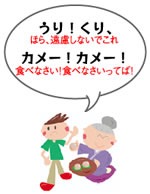
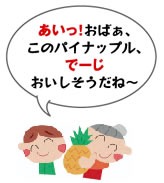
The Okinawan languages are related to Japanese, but they are by no means mutually intelligible.Today, almost everyone on mainland Okinawa can speak standard Japanese, though there are regional words and slight grammatical variations particular to Okinawa. That said, many people, especially Okinawans over 60, can also speak what is widely referred to as “hōgen”, or Okinawan dialect. In reality, what they are speaking is not a dialect of Japanese, but a language unique to Okinawa. As a group, the languages spoken in Okinawa are commonly referred to as Uchināguchi. The Okinawan languages are a part of the Japonic language family along with Japanese. Referring to them as “hōgen” was a political move by the Japanese Empire that started during World War II as part of a plan to build support for the idea of monoculturalism. The idea that the languages spoken in Okinawa are dialects has continued to the present day, but recently there has been a movement growing in Okinawa to change this belief.

Unfortunately, the number of people who can actually converse fluently in any of the Okinawan languages is decreasing rapidly, and all forms of Uchināguchi spoken in Okinawa are considered endangered. Unless in the rare case that they cannot speak Japanese or you look like a person from Okinawa, almost no one will address you in Uchināguchi. They are mindful of the fact that you are foreign and will be happy if you are learning any Japanese at all!

There is no need for you to worry about learning any Uchināguchi before you move to Okinawa, but inserting a greeting or an Uchināguchi word that you have learned when speaking to Okinawans will most likely be positively received!

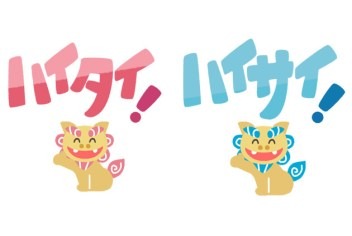
Haisai(ハイサイ)Hello
Haitai(ハイタイ)Hello (feminine)
Mensoore(めんそーれ)Welcome
Yutashiku unigeesabira(ゆたしくうにげーさびら)Yoroshiku onegaishimasu(lit. Please treat me favorably)
Nifee deebiru(にふぇーでーびる)Thank you
Ichariba choodee(いちゃりばちょーでー)Once we meet, we are brothers (proverb)

ENGLISH IN OKINAWA

Despite the presence of U.S. Military and the large amounts of foreign tourists across the islands, Okinawa is just like any other prefecture when it comes to speaking English—the range of proficiency varies widely. The great part of living in Okinawa is that it is one of the more English-friendly prefectures, especially in the cities and the tourist areas. You will come across more English signs and people who can speak at least a very basic level of English in most parts of Okinawa.

However, it is still very much Japan and the main language is Japanese. It is very beneficial to learn at least a very basic level of Japanese (reading, listening, and speaking, in particular) if you want to get around with a bit more ease.
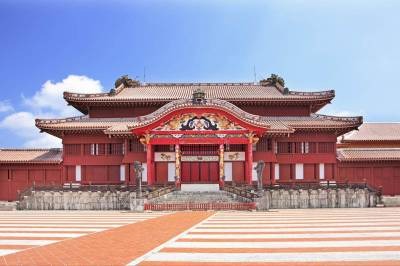
Image credit: 1 & 2, 3

History and Politics

AN OVERVIEW OF OKINAWA’S HISTORY

Long ago, Okinawa was an independent nation known as the Ryukyu Kingdom, and over time it grew to be a trading hub for Southeast Asia, including China and Japan. As a result, the Ryukyu Kingdom had an abundance of cultural and material wealth during its most prosperous years.

In the early 17th century, the Satsuma Clan from Japan got permission from the Tokugawa government to attack Okinawa. After losing the war, the Ryukyu Kingdom had to serve both Japan and China. When the Meiji reforms hit in the late 19th century, Japan attempted to formally incorporate the territory as a prefecture of the newly-formed nation state.

The Battle of Okinawa was the last major battle of World War II. The islands were treated as a sacrificial pawn by Japan’s military elite in order to buy time to prepare the mainland’s defense. During the battle, one-third of the island’s population was wiped out due to disease, hunger, and violence dealt by combatants on both sides of the conflict.

From 1945–1972, Okinawa was put under the rule of the U.S. government, with a status similar to Puerto Rico during the Cold War.

Okinawa reverted to Japanese control during a tumultuous period in 1972. However, the American military presence stayed. As a result, many Okinawans feel manipulated and resentful of the many forces interfering with their sovereignty and self-determination.

POLITICAL ISSUES IN OKINAWA

Deployment of Osprey aircraft: Ospreys are a new form of helicopter being used by the Marines stationed here. Many Okinawans are concerned by their safety record, and worry about their deployment in bases surrounded by crowded civilian areas. It is currently one of the most hotly contested current events here.

Relocation of bases: General sentiment among Okinawans is that they want the American military presence reduced if not removed entirely from the island. Although some people feel differently, they are by far the minority voice. There have been many plans for the relocation of bases, but they are often contested, and end up stalled by diplomatic and bureaucratic processes.

Development of the Henoko area: Henoko is an area in the north that is currently under development to create a new American military base. Many of the proposed relocation plans for the American military say that developing Henoko will allow the military to have a reduced presence, far removed from metropolitan areas. Some Okinawans feel that this is just a land grab and will in the end result in an increased military presence. It is currently a highly contested issue.

THE JET PROGRAMME & POLITICS IN JAPAN

As ALTs, you will be largely able to ignore all of these political issues if you want to, but there are occasions in which these topics may come up in conversation. Please remember that we are contractually forbidden to get involved with political groups, and that if you do so, it could be grounds for your dismissal.

When you engage in conversation, please remember that as JETs we aren’t just normal foreigners over here. We represent not just ourselves but also our home countries, the JET Programme, and the Okinawan Prefectural Government. Anything you say will reflect on all of those institutions and your opinions will shape the feelings of Okinawans towards all of them. It is possible that you could be dismissed for saying the wrong thing at the wrong time. Please be aware of the possible consequences of your actions.

Image credit: 1