Transportation

Overview

While small, Okinawa can be surprisingly difficult to navigate. Because of the hilly terrain, many Okinawans favor driving as their main mode of transportation. While many JETs also favor driving and do eventually end up buying a car, it is still possible to get around without one. JETs living in the Naha area can take advantage of the Yui Rail Monorail, the only train system in Okinawa. JETs in other regions may find they have close access to one of Okinawa’s many bus routes.

Driving

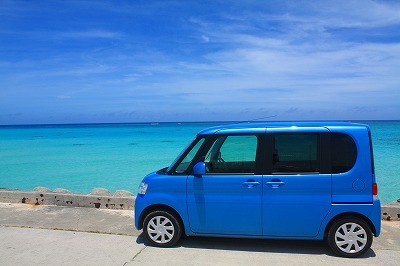
Unlike mainland Japan, Okinawa is designed for car access. Parking lots and garages are readily accessible in most areas. Most apartment buildings offer parking spaces for their residents. In addition to regular streets, Okinawa has several toll roads with rest stops on the side.

International Driver’s Permit (IDP)

Before moving to Okinawa, we recommend obtaining an IDP in your home country. An IDP allows you to drive in Japan for the duration of one year.

  • For those that wish to continue to drive past this one year, you will need to convert your home country’s driver’s license to a Japanese driver’s license. For more information about the conversion process, please read the page on Japanese Driver’s Licenses.

Cars

There are two types of cars you can own: a yellow-license plate (kei) car or a white-license plate car.

  • As part of owning a car, you will need to pay for a shaken, a mandatory vehicle safety inspection.

Learn more about having a car at Cars in Japan.

Monorail System
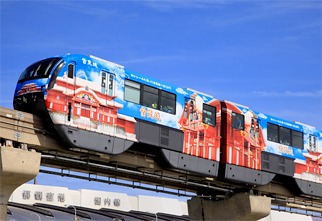
For JETs in Naha and Urasoe, the Yui Rail Monorail offers quick and easy travel. Currently, the monorail has a Down Line departing from Naha Airport and an Up Line departing from Tedako-Uranishi in Urasoe. These lines service a total of 19 stations over 17 kilometers (11 miles).

Ticket Fares

Similarly to trains in the rest of Japan, the ticket fare depends on the distance of travel.

Tickets can be easily purchased from the entrance of any of the stations. All ticket machines have several language options, including English, for easy navigation.

  • For frequent users, an OKICA (prepaid IC card) is available for purchase. Cards can be easily reloaded at the ticket vending machines. These cards can also be used to pay for bus travel.
  • Other train passes, such as Suica or Pasmo, can also be used to pay for the monorail.

Sightseeing

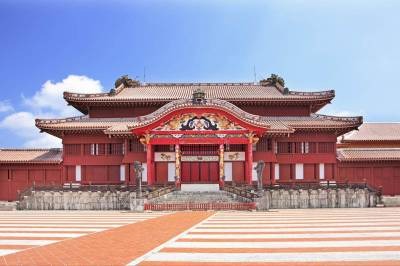
The monorail is a great way to travel to many sightseeing spots, such as Kokusai-dori (International Street) and Shuri Castle.

  • Parking is available at or near most stations. Rental bicycles are also available at some stations.

Daily Life

For those traveling to Naha Airport, the monorail is a great option. Depending on how busy it is, it can take around an hour to get to the airport from the 19th station.

Because many use the monorail to travel to and from work, morning rush hour from 7-9 A.M. can be quite busy. Similarly, 3-7 P.M. can get quite busy as people return home and run errands. On the weekends, rides can be quite crowded depending on the stretch. Expect more traffic as the monorail approaches downtown Naha and the airport.

  • For those that ride the monorail frequently, bicycle parking is available at most stations. If you choose to use this parking, please be sure to lock up your bicycle as theft is still a possibility.
  • If you choose to use the monorail at night, please be aware that the last departures from Station 1 (Down Line) and Station 19 (Up Line) leave at 11:30 P.M.

To learn more about the monorail and view the timetable, please check the official Yui Rail Official Website.

Bus System
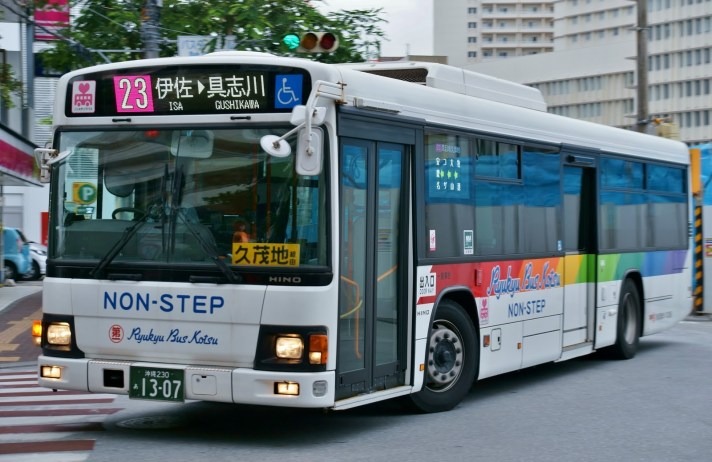
While perhaps not the quickest way to travel in Okinawa, the bus system is extensive in the southern and middle areas of Okinawa. Most buses also stop near the popular sightseeing and tourist sites. That being said, buses in Okinawa are notorious for being on “island time”—a.k.a. almost always late. Those who plan accordingly, however, can travel by bus fairly easily.

Ticket Fares

As with the monorail, the ticket fair depends on the distance of travel. Using Google Maps, you can get a close estimate of the price for your trip beforehand. On the bus, there is a fare board that displays the fares.

  • Frequent riders should consider getting a Suica or OKICA card. Cards can be reloaded when deboarding the bus or at monorail stations.
    • Note that Suica, a mainland IC card, may not work on all buses. Bus stops will display this information, so please check if you plan on paying this way.
  • Occasional riders can grab a ticket when boarding the bus. When exiting, pay at the front.

Routes

There are many routes in Okinawa, with several that stretch from Naha to Nago and stop near famous sightseeing spots.

  • While many of these routes only stop at major bus terminals in the larger cities, many smaller towns and villages also have a community bus system that services that town or village. These buses are often themed to the specific village or town, making them stand out.

For the official information on buses in Okinawa, check out Okinawa Bus Ltd.

See Bus System for an in depth explanation of routes and more resources.

Outer-Island Access
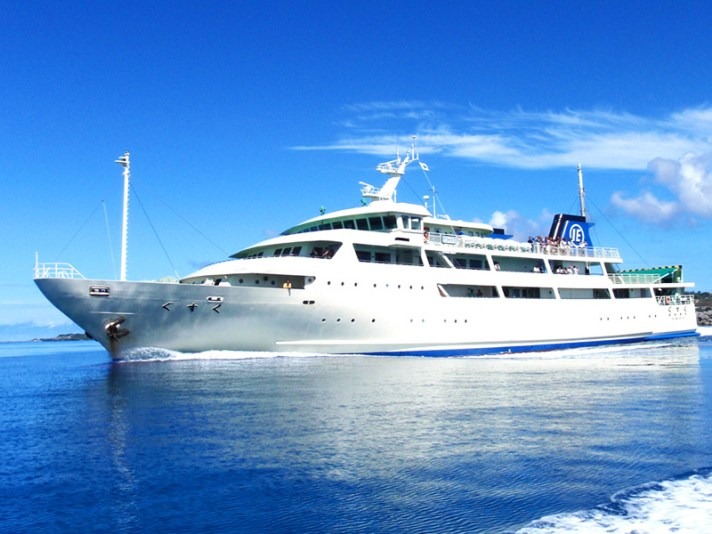
As with the main island, many living on an outer island prefer to own a vehicle and drive for ease of access. Some of the closer islands are connected via bridge to the main island, meaning that you can drive to them. For those islands that are further out, access is limited to taking a ferry or an airplane. For specific information on your destination, please check out the Island Guides.

Ferries

On Visit Okinawa Japan’s website you can find more information about ferries that travel between Okinawa’s islands. There are several ports of access from the main island.

  • Naha Tomari Port
    • Services the Kerama Islands, Aguni Island, Kume Island, Tonaki Island, Kita-Daito, and Minami Daito
  • Motobu Port
    • Services Ie Island, the Amami Islands, Okinoerabu Island, and Kagoshima Prefecture
  • Toguchi Port
    • Services Minna Island
  • Unten Port
    • Services Iheya Island and Izena Island
  • Heshikiya Port
    • Services Tsuken Island
  • Azama Port
    • Services Kudaka Island

Depending on the destination, multiple ferries may be available. A standard ferry can take longer to bring you to your destination but can offer more sightseeing opportunities. For those who wish to arrive quickly, high-speed ferries that arrive in half the time may be available.

Larger ferries tend to be fairly spacious and comfortable with both indoor and outdoor seating options available. These ferries also include televisions for entertainment and on-board bathrooms.

Airplanes

While more expensive than a ferry, airplanes are the fastest option. Unlike ferries which can make multiple crossings per day, flights may be limited with some islands only being visited a few times each week.

  • Islands that can only be reached via airplane include the Miyako Islands and the Yaeyama Islands.

For more information on flights, please read Airport Routes and Airlines.
Image credit: 1, 2, 3, 4

Weather

Overview

Located between the East China Sea, the Pacific Ocean, and the Philippine Sea are the islands of Okinawa Prefecture. With a subtropical climate, Okinawa has an average temperature of 22°C (72°F) with mid to high humidity levels. In the summer months, the combination of high humidity with temperatures around 30°C (88°F) make for miserably hot weather. In the winter months, the temperature does not usually fall below 10°C (50°F). However, it can feel fairly cold because of strong northern winds whipping over the ocean and frequent cloudy days.

Hot Weather Season

Depending on the climate to which you are accustomed, the weather in Okinawa can be an uncomfortable adjustment. While you may find that the heat does not bother you, the high humidity levels can be challenging.

July and August

  • The hottest months of the year, July and August usually average 32°C (90°F) with humidity levels of 80-90%.
  • While July and August are usually the hottest months of the year, expect hot, humid weather from May through October.

Air Conditioning

  • In order to combat the heat, most apartments are equipped with an AC unit. If you find yourself having to buy a new AC unit, it may cost around ¥50,000 or more.
  • In addition to your apartment, schools generally have air conditioning, although they may limit the usage to days with extremely high temperatures. Even then, cooling might be limited to certain rooms.

Clothing

  • During summer, many Okinawans choose to wear kariyushi shirts. These shirts can be easily obtained in most department stores in Okinawa, though they can be a little expensive.
  • For further recommendations and information regarding clothing, please check Clothing.

For further information about preparing for summer, please visit this page: Combating Summer.

Cold Weather Season

As buildings are designed to withstand the heat of summer, the chill of winter can penetrate buildings quite easily. The strong winds of winter also contribute to a sense of chilliness that is not necessarily reflected in the air temperature. While Okinawa may not experience snow or sleet, even those from countries with proper winters may find this season to be colder than they expect.

January and February

  • The coldest months of the year, January and February usually average 17°C (62°F) with humidity levels of 60-70%.

Heating

  • Central heating is generally nonexistent. Many JETs invest in a small electric heater to use at home.
  • While some workplaces may also have a heater, the majority will not. Be prepared to dress warmly.

Dryness

  • While the winter months may see some rain, the humidity will decrease, causing both dry skin and coughing as a result of the dry air.

In Between Weather Season

Unlike the majority of Japan, Okinawa does not have well-defined autumn and spring seasons. These seasons tend to be unpredictable in both timing and weather. While autumn generally falls in November and December, it can start as early as October. Spring is much the same–sometimes starting as early as February. Both seasons are prone to changeable weather where the day may start sunny before quickly changing to rain. This change in weather can also be seen between areas and cities–an occurrence Okinawans describe with the word katabui (カタブイ).

November and December

  • In between the mugginess of summer and the cold winds of winter, Okinawa experiences a short autumn. Temperatures in these months sit in the low twenties (around 70°F) with humidity in the low 70% range.

March and April

  • After a cold winter comes a short spring. Much like autumn, spring temperatures sit in the low twenties (around 70°F); however, spring tends to be a bit more humid at around 80%.

Clothing

  • During these seasons, layers are helpful. It is not uncommon to see a mix of lightweight windbreakers/sweaters and short-sleeved shirts. For specific recommendations, please check Pre-Arrival.

Rainy Season

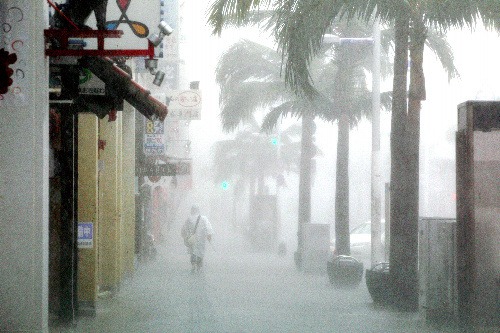
A season characterized by persistent clouds and rain showers, tsuyu (つゆ 梅雨; also pronounced as baiu) starts early in Okinawa. While many lament having to shelter inside, the rainy season is the last break in weather before a long and intense summer.

May and June

  • Lasting around a month, tsuyu generally falls between May and June each year. Temperatures for these months fall between 24°C and 26°C (75°F and 80°F) with humidity levels reaching as high as 90%.

Preparation

  • Many of the tips discussed in Combating Summer also apply to the rainy season. Before leaving your apartment for the day, be cautious about leaving any doors and windows open. All supermarkets and drugstores sell dehumidifiers by the pack. You may find that some of your windows/doors can collect condensation. Placing a towel or tray under such places can help to prevent water damage to your apartment.

Typhoon Season

Typhoons are tropical storms that form in the ocean and can make landfall. While typhoons can be quite severe, the majority of typhoons tend to be weak and/or never approach land.

May through September

  • Some typhoons approach as early as May; however, most typhoons come during the months of June, July, and August.

Weather

  • During a typhoon, the temperature does not fluctuate much from the norm, but, with the rain, the humidity does increase to that of 90 to 100%. Additionally, typhoons can cause power outages, meaning that you may find yourself without the use of air conditioning and fans. Try to keep yourself as cool and hydrated as possible during times of high humidity.

For further information about typhoon preparations, please visit this page: Typhoon Preparation.

Image credit: 1, 2

Language

THE MAIN LANGUAGE

Standard Japanese is the language most widely spoken in Okinawa. Originally various Okinawan languages were spoken on the Okinawan islands. However, after annexing the Ryukyu Kingdom, Japan imposed a rigid campaign of assimilation which focused on eradicating the Okinawan languages and replacing it with the Japanese language.

OKINAWAN “DIALECT”

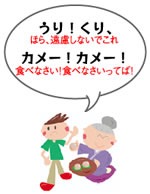
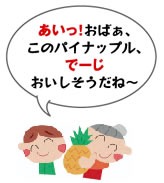
The Okinawan languages are related to Japanese, but they are by no means mutually intelligible.Today, almost everyone on mainland Okinawa can speak standard Japanese, though there are regional words and slight grammatical variations particular to Okinawa. That said, many people, especially Okinawans over 60, can also speak what is widely referred to as “hōgen”, or Okinawan dialect. In reality, what they are speaking is not a dialect of Japanese, but a language unique to Okinawa. As a group, the languages spoken in Okinawa are commonly referred to as Uchināguchi. The Okinawan languages are a part of the Japonic language family along with Japanese. Referring to them as “hōgen” was a political move by the Japanese Empire that started during World War II as part of a plan to build support for the idea of monoculturalism. The idea that the languages spoken in Okinawa are dialects has continued to the present day, but recently there has been a movement growing in Okinawa to change this belief.

Unfortunately, the number of people who can actually converse fluently in any of the Okinawan languages is decreasing rapidly, and all forms of Uchināguchi spoken in Okinawa are considered endangered. Unless in the rare case that they cannot speak Japanese or you look like a person from Okinawa, almost no one will address you in Uchināguchi. They are mindful of the fact that you are foreign and will be happy if you are learning any Japanese at all!

There is no need for you to worry about learning any Uchināguchi before you move to Okinawa, but inserting a greeting or an Uchināguchi word that you have learned when speaking to Okinawans will most likely be positively received!

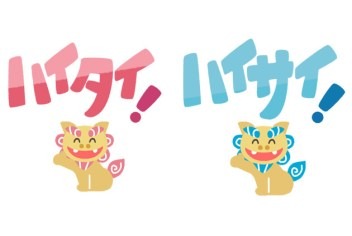
Haisai(ハイサイ)Hello
Haitai(ハイタイ)Hello (feminine)
Mensoore(めんそーれ)Welcome
Yutashiku unigeesabira(ゆたしくうにげーさびら)Yoroshiku onegaishimasu(lit. Please treat me favorably)
Nifee deebiru(にふぇーでーびる)Thank you
Ichariba choodee(いちゃりばちょーでー)Once we meet, we are brothers (proverb)

ENGLISH IN OKINAWA

Despite the presence of U.S. Military and the large amounts of foreign tourists across the islands, Okinawa is just like any other prefecture when it comes to speaking English—the range of proficiency varies widely. The great part of living in Okinawa is that it is one of the more English-friendly prefectures, especially in the cities and the tourist areas. You will come across more English signs and people who can speak at least a very basic level of English in most parts of Okinawa.

However, it is still very much Japan and the main language is Japanese. It is very beneficial to learn at least a very basic level of Japanese (reading, listening, and speaking, in particular) if you want to get around with a bit more ease.

Image credit: 1 & 2, 3

History and Politics

AN OVERVIEW OF OKINAWA’S HISTORY

Long ago, Okinawa was an independent nation known as the Ryukyu Kingdom, and over time it grew to be a trading hub for Southeast Asia, including China and Japan. As a result, the Ryukyu Kingdom had an abundance of cultural and material wealth during its most prosperous years.

In the early 17th century, the Satsuma Clan from Japan got permission from the Tokugawa government to attack Okinawa. After losing the war, the Ryukyu Kingdom had to serve both Japan and China. When the Meiji reforms hit in the late 19th century, Japan attempted to formally incorporate the territory as a prefecture of the newly-formed nation state.

The Battle of Okinawa was the last major battle of World War II. The islands were treated as a sacrificial pawn by Japan’s military elite in order to buy time to prepare the mainland’s defense. During the battle, one-third of the island’s population was wiped out due to disease, hunger, and violence dealt by combatants on both sides of the conflict.

From 1945–1972, Okinawa was put under the rule of the U.S. government, with a status similar to Puerto Rico during the Cold War.

Okinawa reverted to Japanese control during a tumultuous period in 1972. However, the American military presence stayed. As a result, many Okinawans feel manipulated and resentful of the many forces interfering with their sovereignty and self-determination.

POLITICAL ISSUES IN OKINAWA

Deployment of Osprey aircraft: Ospreys are a new form of helicopter being used by the Marines stationed here. Many Okinawans are concerned by their safety record, and worry about their deployment in bases surrounded by crowded civilian areas. It is currently one of the most hotly contested current events here.

Relocation of bases: General sentiment among Okinawans is that they want the American military presence reduced if not removed entirely from the island. Although some people feel differently, they are by far the minority voice. There have been many plans for the relocation of bases, but they are often contested, and end up stalled by diplomatic and bureaucratic processes.

Development of the Henoko area: Henoko is an area in the north that is currently under development to create a new American military base. Many of the proposed relocation plans for the American military say that developing Henoko will allow the military to have a reduced presence, far removed from metropolitan areas. Some Okinawans feel that this is just a land grab and will in the end result in an increased military presence. It is currently a highly contested issue.

THE JET PROGRAMME & POLITICS IN JAPAN

As ALTs, you will be largely able to ignore all of these political issues if you want to, but there are occasions in which these topics may come up in conversation. Please remember that we are contractually forbidden to get involved with political groups, and that if you do so, it could be grounds for your dismissal.

When you engage in conversation, please remember that as JETs we aren’t just normal foreigners over here. We represent not just ourselves but also our home countries, the JET Programme, and the Okinawan Prefectural Government. Anything you say will reflect on all of those institutions and your opinions will shape the feelings of Okinawans towards all of them. It is possible that you could be dismissed for saying the wrong thing at the wrong time. Please be aware of the possible consequences of your actions.

Image credit: 1