
Post-Arrival

Welcome to Okinawa! You must be feeling excited and overwhelmed with everything you’re facing at the moment. The following list of items should comprise your top priorities when arriving in Okinawa. Your supervisor or ALT Coordinator should help you with these. For some of you, your supervisor will work with you at your base school. For others, your supervisor will be a department head at your local city/town/village hall or office. Wherever your supervisor is located, it is important to learn his/her name and obtain his/her contact info. They will most likely be in charge of your school scheduling and will be responsible for informing you of important contractual events throughout the year.

1. Residence Card (在留カード zairyuu kaado)
2. Make a Stamp (印鑑 inkan / 判子 hanko)
3. Find an Apartment
4. Set Up Utilities
5. Proof of Address Form (住民票 jyuuminhyou)
6. Getting a Cell Phone (携帯 keitai)
7. Set Up a Bank Account
8. Set Up Internet


.

1. Residence Card (在留カード zairyuu kaado)

JETs arriving after July 9, 2012 will each received a residence card upon arriving at Narita Airport. You will need this card to take care of a few post-arrival errands such as purchasing a cell phone and opening a bank account. Foreign residents in Japan must carry this card with them AT ALL TIMES.

This residence card also serves as a re-entry permit for JETs when traveling outside of Japan, so long as you return within one year of your departure date and it is within the period of stay stated on the card. You cannot apply for an extension of the period of stay outside of Japan.

BACK TO TOP ↑


.

2. Make a Stamp (印鑑 inkan / 判子 hanko)

Inkans are used in place of signatures in Japan. After you make an inkan, you will need to register it at your bank as your legal inkan. It will be necessary for setting up most accounts or signing important contracts or forms. They can be ordered at local inkan shops and can be ready within a few days. Some municipal offices do not accept katakana inkans, so you may want to ask your predecessor or supervisor beforehand. Most JETs prefer to use their first names. Prices of inkans start at¥1,500. Consider your inkan to be one form of personal identification. There is a high chance your BOEs or schools will create one for your before you arrive. DO NOT LOSE YOUR INKAN OR USE IT ON ANYTHING OTHER THAN OFFICIAL DOCUMENTS.

NOTE: Without your Residence Card and inkan you cannot get many things in Japan (a bank account, mobile phone, car registration, etc).  When arriving in Okinawa, these are the first 2 things you need to take care of. We will do our best to make sure your supervisor knows how to go about getting these things done.

BACK TO TOP ↑


.

3. Find an Apartment

Necessary Documents:
Residence Card
Bank Account (for automatic withdrawal)

Hopefully, this has already been arranged for you before your arrival, but if not please do not panic. Meet your landlord (fudosan) with your supervisor. Your supervisor should go over the lease with you so that you understand everything you and the landlord are responsible for. Get two copies of the key. Make sure you know all of the building’s policies before signing the contract.

For those of you without housing readily available, do not panic…there are lots of apartments in Okinawa and many JETs have successfully found apartments after arriving in Okinawa. Many people found apartments within the first 2 days. While they were searching they either stayed at a cheap business hotel at their own expense (¥3,000–5,000 a night), stayed with another JET in the area, or stayed with their Supervisor (or another staff member) until they found an apartment they liked. This might sound like a nightmare, but there are many positives: 1) you can choose an apartment that fits your preferences; and 2) you don’t automatically pay key money (moving in fees) for an apartment you’ve never even seen before.

For more information on the process of finding an apartment, please refer to the Welcome Handbook.

e-uchina.net (JPN)

BACK TO TOP ↑


.

4. Set Up Utilities

Necessary Documents:
Bank Book (for automatic withdrawals)
Phone Number (cell)

Your supervisor is expected to help you with these. Automatic bank withdrawals are the most popular way to pay these monthly bills. However, if you would rather pay in person, most bills can be taken care of at any convenient store or ATM.

Helpful Words to Know:

Gasガスgasu
Electricity電気denki
Water水mizu
Phone (landline)電話denwa

Phone lines can be purchased directly from NTT, rented or purchased from an agency, or bought privately. Mobile phones (keitai) are another popular option and there are many to choose from that offer such things as email and English displays.

BACK TO TOP ↑


.

5. Proof of Address Form (住民票 jyuuminhyou)

Necessary Documents:
Residence Card
An address

You can get a proof of address form from your city hall. You will need this form to open cell phone contracts, move into a new apartment, or register your car. It is advised to get around 3 copies if possible.

BACK TO TOP ↑


.

6. Getting a Cell Phone (携帯 keitai)

Necessary Documents:
Residence Card or
Proof of Address Form

Most people in Japan carry a keitai (cell phone), even your students in junior and senior high will have one. They are a full part of modern Japanese society and are becoming more sophisticated every day.

Keitai plans are quite different from other countries, so ask your supervisor (or someone else who speaks Japanese) to come with you when so that you can understand the charges and rate plans and choose the one that you think will suit you the most.

There are 3 major keitai companies in Japan: AU, Docomo, and SoftBank. All of the companies are quite similar but do offer different models and services. When you are looking at models, be sure to ask if the phone is bilingual (meaning it has English and Japanese capabilities). Most of the newer and more fancier models are only in Japanese but there are lots and lots of models that have lots of interesting gadgets and devices that have English capabilities.

Rather than purchasing a brand new phone and opening a phone plan, another option is to open a plan with a sim card and use it in an unlocked phone. You will need the help of your coordinator to navigate this option. Some useful sites are OCN Mobile One and MVNO.

BACK TO TOP ↑


.

7. Set Up a Bank Account

Necessary Documents:
Residence Card or
Work Contract
Inkan

Through your account, you can have your utility, internet, and phone bills automatically withdrawn (note that withdrawal dates for these are usually different) and have your paycheck automatically deposited (depends on your employer). Please note there are some Okinawa companies that will only allow automatic withdrawal from an Okinawan Bank account. Ask your supervisor for help.

If you are planning on traveling around mainland Japan, it is recommended that you get a post office bank account as you can use the bank machines anywhere in Japan. Some JETs have two accounts, one at a local bank (such as Okinawa Bank or Bank of the Ryukyus) and one at the post office for traveling and sending money home.

Okinawa Bank (沖縄銀行)
Bank of the Ryukyus (琉球銀行)

BACK TO TOP ↑


.

8. Set Up Internet

It has been easier to get connected to the Internet over the past few years. NTT FLETs or Yahoo! BB (Broadband) are the most popular internet companies, although there are many smaller Internet companies that offer similar services. You can also get packaged deals that include a home phone line and an Internet line or cable so you may want to look into that if it is of interest to you.

Most large electronic stores (Best Denki, Yamada Denki, Deo Deo inside any San-A) have booths for NTT and Yahoo! BB where you can apply to install internet into your apartment.

Phones bundled with an internet connection usually offer cheaper international rates.

Mobile Internet wifi is also popular for their flexible contract years.

Yet again, many young Japanese people use both a prepaid flip phone and an iPad/iPad mini/smartphone.  Prepaid phones and PHS phones offer the most competitive rates for phone calls.  Japanese cell phone companies offer data-only plans for smart devices, from which you can email, message via Line, etc.  If you really wanted to be cheap and lived in an area with enough constant access to free wifi, you could avoid even a data plan.  However, Japan is a little behind on its wifi access, so having a data plan with your smart devices and a cheap prepaid flip phone or PHS phone for calls is another smart way to go.

Good Luck with your preparations!
Clothing

Overview

Because every situation is different (ESID), we recommend asking your predecessor(s) for an idea of which clothes will be acceptable. We also advise that new JETs dress professionally at first. While you settle in, look around to see what other teachers are wearing, especially teachers in the same department (for SHS/JHS JETs, English department teachers) or similar positions (for ES JETs, homeroom teachers). As everyone generally arrives during summer vacation, teachers will most likely be dressed more casually than usual, so please keep this in mind. Most schools start the first day of the semester with an opening ceremony, in which some JETs may be asked to give an introduction to the entire school, so please dress professionally.

As a general rule, start off formal at work in order to make a good first impression. Over time, you can slowly adjust your clothing to match the rest of the staff.

Guidelines

Shirts

Button-ups are recommended. Kariyushi wear (Okinawan button-ups), polo shirts, and suit shirts are all professional shirts accepted at most schools. Blouses are also acceptable, but they should have a high neckline.

T-shirts are usually only permissible for special school-related events.

Pants

Slacks and suit pants are recommended. Elementary schools can be more casual with many teachers wearing tracksuits and dark-colored jeans. Please check with your predecessor to get a general idea of acceptable pants.

Dresses and Skirts

Hems should fall below your knees. Many teachers will wear pantyhose or leggings underneath knee-length garments. Dresses and skirts falling at the mid-calf and below are recommended and do not generally require pantyhose or leggings.

General Guidelines

  1. If a shirt shows any part of your back or cleavage when you bend over, it should not be worn at work.
  2. If you can see any part of your stomach or back when your arms are raised, it should not be worn at work.
  3. If it has no sleeves, it should not be worn at work by itself; shoulders should be covered at all times.
  4. Tattoos must be covered up at all times.

Suits

While most schools in Okinawa do not require their ALTs to wear suits on a daily basis, it is important that everyone has at least one suit for important meetings and events, such as Tokyo Orientation, Skills Development Conferences (SDC), recontracting ceremonies, graduation ceremonies, and speech contests. Please note that kariyushi wear does not replace a suit on the mainland or at important ceremonies such as graduation ceremonies.

Kariyushi

Kariyushi shirts are a standard item in many Okinawans’ closets. Wearing kariyushi will often keep you cooler than traditional dress shirts while still looking just as appropriate for the workplace. As such, we highly recommend that you purchase at least one of these shirts. If you are lucky, you may be able to find one at a discount or secondhand store for a great price. If not, large department stores generally offer a good variety for ¥3,000-6,000. You can also shop for them online; brands such as Majun and Mango House have great websites to browse. Majun, in particular, has several lines, including a plus-size line.

Footwear

Unlike many of our home countries, Japan has many rules regarding footwear that can be confusing. For most of us, the important thing to remember is that different rooms can have different rules. Officially, proper footwear in school is business casual, such as slip-on leather dress shoes. As ESID applies to footwear as well, we recommend asking your predecessor(s) for specifics regarding your school(s).

  • All the time
    • In some schools, teachers spend the entire day in their indoor shoes. In such cases, please prepare comfortable shoes with a clean sole. These shoes can range from slides to sneakers to nice slip-on shoes.
  • Staff Room Only
    • In some schools, indoor shoes are only required in the staff room. In this case, easy to slip on shoes are recommended. While teaching, you may be expected to wear your outdoor shoes. In this case, you may need to invest in a pair of comfortable, professional shoes.
  • Specific Rooms
    • In addition to general guidelines for schools, certain rooms also have footwear rules.
      • Tatami rooms
        • Shoes can damage tatami mats, so please ensure that you remove your shoes before stepping on any tatami mats.
      • Restrooms/Toilets
        • Many schools will provide restroom slippers that everyone shares. As you step into the restroom, remove your shoes and slip into one of the provided pairs of slippers.
      • Gyms
        • Unless set up for an event with a protective cover over the floor, gyms require indoor shoes.
  • Official Functions/Special Events
    • For official functions and special events, please remember that the dress code is formal business wear. Your shoes need to match this dress code, so please do not wear slippers, slides, open-toed shoes, or other similar casual shoes. Official functions include the Okinawa New JET Orientation, the Skills Development Conference, and graduation ceremonies.

Winter Wear

Okinawa can be deceptively cold in winter. Although the outside temperature may not be very cold, the accompanying rain and wind can be quite chilly. Additionally, the lack of insulation in the concrete buildings results in very little temperature difference between indoors and outdoors. Please bring a good jacket with you for these days. You may also need warm clothes for at-home use.

Those interested in traveling to mainland Japan during this season may also want snowy weather clothes. You may have trouble finding this sort of clothing in Okinawa as snow is a rare phenomenon.

See Weather for more information.

Clothing Recommendations

Okinawan summers can get very hot with the temperatures averaging in the low thirties (°C) and the humidity levels reaching as high as 95%. As summer generally lasts from May to October, those arriving in August will want to be prepared with plenty of summer-friendly clothes. August through September is also typhoon season, so you may want to bring a lightweight raincoat. For those interested in shopping, here are some recommendations to get you started:

Swimwear

A perk of living in Okinawa is beach access. If you are at all interested in visiting the beach, please bring a swimsuit as it might be hard to find one in your size. Many local people wear old sportswear (moisture wicking shirts and gym shorts) or swimshirts in the ocean. While bikinis are acceptable at the beach, please note that gyms tend to be more conservative, requiring one-pieces and swimshirts.

Footwear

Japanese shoes are measured using centimeters. Women’s shoes are available up through 25 centimeters, and men’s shoes are available up through 28 centimeters. If you look, you may be able to find larger sizes, especially online. Although expensive, importing shoes is an option if needed.

  • ABC Mart
    • Found in most AEON shopping centers, ABC Mart sells shoes for all occasions in a variety of sizes. ABC Mart also carries many international brands such as Vans, Converse, and Nike.

Jeans

Most JETs should not have trouble finding shirts that fit them here in Japan. The same cannot be said for pants, however, as length is often an issue. Those over 190 centimeters may need to rely on online shopping to get an inseam that reaches the ankle. Those with curves may also need to rely on online shopping to purchase clothes that fit adequately.

Undergarments

While not impossible, Japanese sizing can make shopping for bras and underpants difficult. Many Japanese bras tend to run small with lots of padding. Fortunately, shipping is a possibility, so you may be able to buy clothes from another country.

  • Shimamura
    • Shimamura carries different styles of bras that go up to the size 5L.
  • San-A Department Stores
    • Bigger department stores tend to have a larger size range. If you are in need of a larger size, check out Naha Main Place.

Sweat-Wicking Clothes

In order to combat the mugginess of Okinawa’s weather, we recommend wearing layers. While it may seem counterintuitive, many clothing companies have lines specifically designed to keep you feeling fresh throughout the day. Wearing moisture-wicking undershirts, underwear, and even socks is definitely worth trying if you never have before.

  • Uniqlo’s Airism
    • The Airism line from Uniqlo does a good job of wicking away sweat for a low price tag. They have many undershirts and undershorts available in a wide range of sizes. Most products can be purchased online and delivered in a few days.

For product recommendations, please check out Combating Summer.

Plus-Size

Due to the trend for oversized, loose fitting garments, many popular chain stores carry sizes that work for a variety of body shapes.

  • H&M
    • H&M is a great option to shop for both casual and work-appropriate clothes. While H&M does offer fast shipping through its online store, sizing can be difficult to judge, and many considered plus-size by Japanese standards may be able to find clothes that fit among the regular selection.
  • Shimamura
  • Foel Naha Oroku
    • Located near Book Off Oroku Branch
  • Noannu
    • While on the pricier side, Noannu has a great selection of clothes for plus-sizes.
  • ANTIQULTURE in AEON Rycom
    • Because many of their vintage clothes are sourced from other countries, the size range is greater than most Japanese stores. The downside is that these pieces can be quite expensive and difficult to find in the vastness of the store.

Pre-Arrival

Regarding Driving

Overview

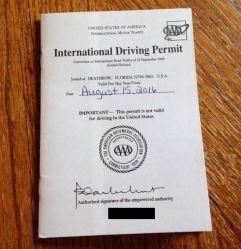
Okinawa is a very driving-oriented society. Even people living in Naha or on smaller outer islands tend to own a vehicle for ease of access. For this reason, many JETs own their own vehicle and drive (see Transportation). In order to drive in Okinawa, an international driving permit (IDP) is recommended.

IDPs

While not a requirement, those who intend to drive soon after arriving should obtain an IDP in their home country. An IDP allows you to drive in Japan in conjunction with your home country’s license. An IDP is valid for one year from the date listed on the cover, or for the validity of your home country’s license (whichever is shorter).

After the one-year expiration, you must obtain a Japanese driver’s license if you wish to continue driving (See Japanese Driver’s License). While it is possible to renew your IDP, Japanese law requires that you leave the country for 3 months in order to do so, meaning that this is not an option for the majority of JETs.

Note: Police may check your IDP against your Residence Card to see whether or not you have been in the country for longer than one year. If you have, they may request to see your passport to confirm whether or not you have been out of the country for the required 3 month period. This law is reportedly designed to stop people from driving on a cheaper IDP instead of the more expensive Japanese license.

Note: If you are still a 1st year JET and you did not get an IDP before you left your home country, then it is possible to apply for an IDP from overseas.

US JETs: National Automobile Club
Canadian JETs: Canadian Automobile Association

Necessary Documents for Driver’s License

It may seem odd for incoming JETs to think ahead into a second year, but for those of you considering two years, it is highly advised that you bring certain documents with you in order to complete the Japanese license conversion process. These documents are necessary to prove that you have driving experience in your home country. To this end, these documents must prove that you have resided in your home country for at least three months. Here is a list of some recommended documents:

  • Passport
    • Many JETs are able to use their passport as proof. However, some passports–particularly The United States–do not provide proof of residence because they do not have the necessary stamps showing the exact date of entry and departure.
  • Tax Forms
  • College Transcripts
  • Official Driving Record
    • Some countries may provide both digital and paper copies of official driving records upon request.

For more information regarding the conversion process, see Japanese Driver’s License.

Regarding Money

Overview

As Japan is a cash-based society, all JETs should be prepared to bring a large amount of money with them. While we have provided estimates and a list of expenses down below, we encourage new JETs to contact their predecessor(s) for more specific numbers.

Initial Costs

The initial cost of moving to Japan is often much greater than new JETs expect. While the total cost does vary by person and situation, we have provided a rough estimate of how much money is needed. In addition to start-up costs, this money should last until your first paycheck. For some, this will take a few weeks; for others, over a month.

  • ¥420,000
    • About 50% of JETs report needing this much for their start-up costs
  • ¥350,000
    • About 40% of JETs report needing this much for their start-up costs
  • ¥150,000
    • About 10% of JETs report only needing this much for their start-up costs. Note that this 10% is generally comprised of those that have teachers’ housing available.

Note: These estimated costs do not include the cost of purchasing a vehicle.

Note: If you live in a rural area, teachers’ housing may be available. Teachers’ housing is not guaranteed nor available at request. While teachers’ housing is very cheap due to it being subsidized, it can also be very old and rundown.

Expense List

Housing Costs

  • First Month’s Rent
    • The majority of apartments rent for ¥30,000 to ¥60,000 a month. While those living in urban areas can expect to pay more for less space, those living in smaller villages and rural areas may have more options.
  • Housing Fees
  • Key Money (known as reikin or azukekin)
    • A deposit gifted as a thank you to your landlord, key money can be as much as one or two month’s worth of rent. This money is non-refundable.
  • Parking Space
    • Depending on the area, you may have to rent your parking space from the landlord. On the low end, this can be ¥2,000 a month. On the high end, this can be ¥10,000 a month.
    • Some apartments may calculate a non-optionable parking fee into your monthly rent.
  • Utilities Deposit
    • While water is often a set fee calculated into your rent, gas and electricity are often separate. While you may be able to set up direct withdrawal, the first payment(s) will need to be completed at a convenience store or other similar place.

Other Initial Costs

  • Initial Hotel Stay
    • While some JETs are able to enter their apartments immediately upon arrival in Okinawa, some JETs are not. If you are not able to secure an apartment upon arrival, you will have to make other arrangements.
    • In some cases, you may be able to ask other nearby JETs to stay with them. In the majority of cases, you will have to arrange a hotel/hostel stay. These costs will most likely be your responsibility.
  • Predecessor’s Things
    • If you have a predecessor(s), you may be able to receive items from them. While miscellaneous items (cleaning supplies, kitchen utensils) may be gifted to you for free, heavier items and appliances may come with a (sometimes) negotiable price.
    • As predecessors understand the financial burden of start-up costs, they may be willing to set up a repayment system with you. Please communicate with your predecessor(s) for this information.
  • Furnishings
    • While some JETs may receive items from their predecessor(s), those that are not should be prepared to  spend some money on furniture and furnishings. While the extent of these furnishings depends on you, a basic futon set costs ¥5,000 on the low end.
  • Car
    • If you plan to start driving right away, you will need to be prepared to buy a car. Depending on its condition, used cars can be ¥150,000–¥300,000.
    • Your predecessor(s) may have a car that they can sell to you. In this case, the price should be discussed with your predecessor.
  • Luggage Shipping
    • Depending on the amount of luggage that you have brought, you may need to ship some of it.
    • Airplane tickets to Okinawa generally allow for one suitcase. Any extra suitcases should be shipped from Tokyo Orientation. Shipping costs can be billed at a later date.

Card Usage

Japan is a cash-based society; however, in an attempt to modernize, both foreign-issued and Japanese-issued credit and debit cards are becoming more widely accepted. Particularly in popular tourist and sightseeing areas, more stores will accept credit and debit cards. ATMs at banks and convenience stores also accept credit or debit cards. Please look for the nearby sticker to see which cards are accepted. Here are some stores that accept both foreign-issued and Japanese-issued cards:

  • Amazon
  • Nitori (Furniture/Interior Decor)
  • Uber Eats
  • Franchises (McDonald`s, Domino’s Pizza)

Note: Payments made with a foreign-issued card have to be converted to Japanese Yen. Please check with your home bank to ensure that this process can be done. If issues arise with your home bank, it is beneficial to have somebody in your home country with access to your bank account. Please set this up ahead of time.

For information on how to get a Japanese debit card, see Post-Arrival.

Image credit: 1

Welcome to the OkiJET website!

This website is under construction! Your OkiPAs are currently working to update our beloved website.

We are planning to update the information as well as the format of this site. If you are searching for information that you can no longer find, please email us. We have saved all of the pages and posts! Don’t hesitate to ask.

Thanks,

2026-2027 PAs (Melissa and Tong)