

Overview
While small, Okinawa can be surprisingly difficult to navigate. Because of the hilly terrain, many Okinawans favor driving as their main mode of transportation. While many JETs also favor driving and do eventually end up buying a car, it is still possible to get around without one. JETs living in the Naha area can take advantage of the Yui Rail Monorail, the only train system in Okinawa. JETs in other regions may find they have close access to one of Okinawa’s many bus routes.
Driving
Unlike mainland Japan, Okinawa is designed for car access. Parking lots and garages are readily accessible in most areas. Most apartment buildings offer parking spaces for their residents. In addition to regular streets, Okinawa has several toll roads with rest stops on the side.
International Driver’s Permit (IDP)
Before moving to Okinawa, we recommend obtaining an IDP in your home country. An IDP allows you to drive in Japan for the duration of one year.
- For those that wish to continue to drive past this one year, you will need to convert your home country’s driver’s license to a Japanese driver’s license. For more information about the conversion process, please read the page on Japanese Driver’s Licenses.
Cars
There are two types of cars you can own: a yellow-license plate (kei) car or a white-license plate car.
- As part of owning a car, you will need to pay for a shaken, a mandatory vehicle safety inspection.
Learn more about having a car at Cars in Japan.
Monorail System
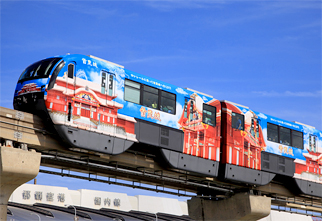
For JETs in Naha and Urasoe, the Yui Rail Monorail offers quick and easy travel. Currently, the monorail has a Down Line departing from Naha Airport and an Up Line departing from Tedako-Uranishi in Urasoe. These lines service a total of 19 stations over 17 kilometers (11 miles).
Ticket Fares
Similarly to trains in the rest of Japan, the ticket fare depends on the distance of travel.
Tickets can be easily purchased from the entrance of any of the stations. All ticket machines have several language options, including English, for easy navigation.
- For frequent users, an OKICA (prepaid IC card) is available for purchase. Cards can be easily reloaded at the ticket vending machines. These cards can also be used to pay for bus travel.
- Other train passes, such as Suica or Pasmo, can also be used to pay for the monorail.
Sightseeing
The monorail is a great way to travel to many sightseeing spots, such as Kokusai-dori (International Street) and Shuri Castle.
- Parking is available at or near most stations. Rental bicycles are also available at some stations.
Daily Life
For those traveling to Naha Airport, the monorail is a great option. Depending on how busy it is, it can take around an hour to get to the airport from the 19th station.
Because many use the monorail to travel to and from work, morning rush hour from 7-9 A.M. can be quite busy. Similarly, 3-7 P.M. can get quite busy as people return home and run errands. On the weekends, rides can be quite crowded depending on the stretch. Expect more traffic as the monorail approaches downtown Naha and the airport.
- For those that ride the monorail frequently, bicycle parking is available at most stations. If you choose to use this parking, please be sure to lock up your bicycle as theft is still a possibility.
- If you choose to use the monorail at night, please be aware that the last departures from Station 1 (Down Line) and Station 19 (Up Line) leave at 11:30 P.M.
To learn more about the monorail and view the timetable, please check the official Yui Rail Official Website.
Bus System
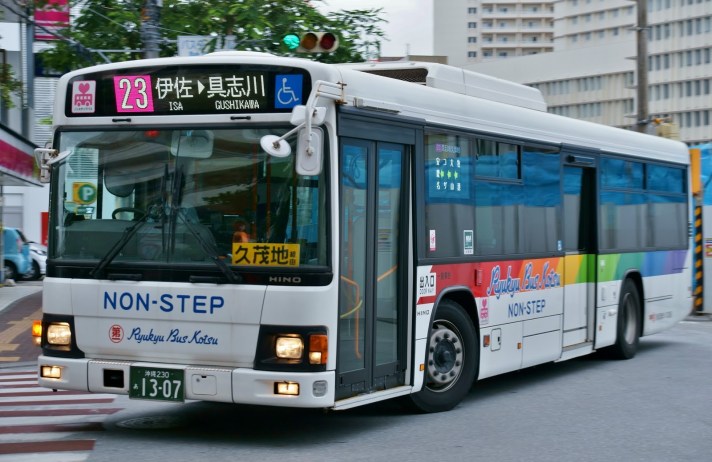
While perhaps not the quickest way to travel in Okinawa, the bus system is extensive in the southern and middle areas of Okinawa. Most buses also stop near the popular sightseeing and tourist sites. That being said, buses in Okinawa are notorious for being on “island time”—a.k.a. almost always late. Those who plan accordingly, however, can travel by bus fairly easily.
Ticket Fares
As with the monorail, the ticket fair depends on the distance of travel. Using Google Maps, you can get a close estimate of the price for your trip beforehand. On the bus, there is a fare board that displays the fares.
- Frequent riders should consider getting a Suica or OKICA card. Cards can be reloaded when deboarding the bus or at monorail stations.
- Note that Suica, a mainland IC card, may not work on all buses. Bus stops will display this information, so please check if you plan on paying this way.
- Occasional riders can grab a ticket when boarding the bus. When exiting, pay at the front.
Routes
There are many routes in Okinawa, with several that stretch from Naha to Nago and stop near famous sightseeing spots.
- While many of these routes only stop at major bus terminals in the larger cities, many smaller towns and villages also have a community bus system that services that town or village. These buses are often themed to the specific village or town, making them stand out.
For the official information on buses in Okinawa, check out Okinawa Bus Ltd.
See Bus System for an in depth explanation of routes and more resources.
Outer-Island Access
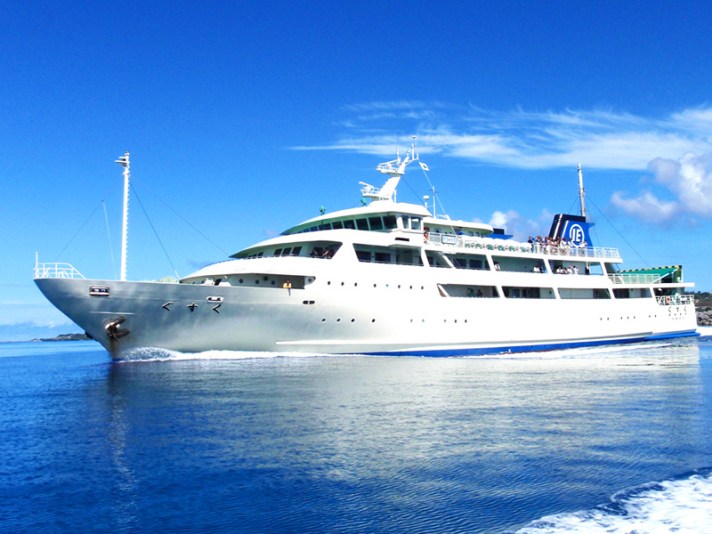
As with the main island, many living on an outer island prefer to own a vehicle and drive for ease of access. Some of the closer islands are connected via bridge to the main island, meaning that you can drive to them. For those islands that are further out, access is limited to taking a ferry or an airplane. For specific information on your destination, please check out the Island Guides.
Ferries
There are several ports of access from the main island.
- Naha Tomari Port
- Services the Kerama Islands, Aguni Island, Kume Island, Tonaki Island, Kita-Daito, and Minami Daito
- Motobu Port
- Services Ie Island, the Amami Islands, Okinoerabu Island, and Kagoshima Prefecture
- Toguchi Port
- Services Minna Island
- Unten Port
- Services Iheya Island and Izena Island
- Heshikiya Port
- Services Tsuken Island
- Azama Port
- Services Kudaka Island
Depending on the destination, multiple ferries may be available. A standard ferry can take longer to bring you to your destination but can offer more sightseeing opportunities. For those who wish to arrive quickly, high-speed ferries that arrive in half the time may be available.
Larger ferries tend to be fairly spacious and comfortable with both indoor and outdoor seating options available. These ferries also include televisions for entertainment and on-board bathrooms.
Airplanes
While more expensive than a ferry, airplanes are the fastest option. Unlike ferries which can make multiple crossings per day, flights may be limited with some islands only being visited a few times each week.
- Islands that can only be reached via airplane include the Miyako Islands and the Yaeyama Islands.
For more information on flights, please read Airport Routes and Airlines.
 Okijets