
Overview
Okinawa’s diverse history allowed it to develop a culture quite different from mainland Japan. Once the Ryukyu Kingdom, Okinawa had its own set of languages and trading partners. In more recent history, Okinawa was once a territory of The United States of America before returning to Japanese control (See History and Politics). Today’s Okinawa is a culmination of this history. Influences from China can be seen in both traditional and performing arts. American influences are predominant in the popular dishes of Okinawan cuisine. We encourage any new JETs to explore the vibrant culture that these islands have to offer.
Clothing
While Okinawa is still as modest as the rest of Japan, the standards for business wear do differ. As summer approaches, many Okinawans will start to wear kariyushi, a button down shirt that is similar in style to a Hawaiian shirt. Kariyushi means harmony or happiness in Uchinaguchi, the collective term for the Okinawan languages (See Language). While initially started to promote tourism in 1970, kariyushi shirts have since become the standard of business wear in the summer months. These shirts tend to be short sleeved, brightly colored, and have motifs representing aspects of Okinawa`s nature, food, and culture. As there are certain standards a shirt has to meet to be given the title of kariyushi, these shirts are best purchased in Okinawa. They can be found at various department stores, online, or at specialty kariyushi stores. For more information on clothing and dress code, please read Clothing.
Here are two brands to consider when buying kariyushi:
- Mango House (¥10,000)
- A chain of stores with locations in various popular spots (Rycom Mall, Kokusai Dori, etc.), Mango House designs their unique kariyushi shirts in-house. While some designs are sold year-round, others are more limited edition. Designs range from more traditional, nature-inspired to younger, pop culture-inspired.
- Majun (¥4,500~¥9,500)
- Easily found at various department stores or online, Majun has a wide range of kariyushi suitable for a variety of events. Majun also has many lines dedicated to specific needs, including a plus size line.
Food
While Okinawans enjoy food from mainland Japan (ramen, sushi, curry, etc), Okinawa has its own set of unique dishes influenced by Japan, China, and America.
Okinawa Soba
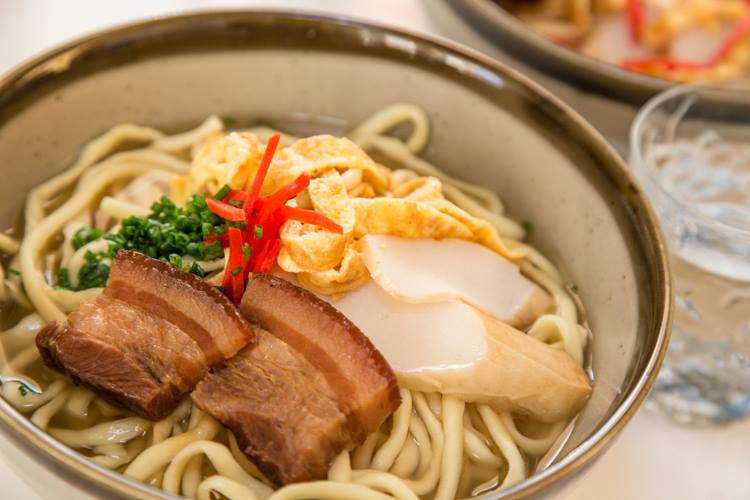
While closely resembling udon in terms of noodle thickness and ramen in terms of flavor, Okinawa soba is a food beloved by residents of Okinawa. Because soba means ‘buckwheat’, many argued that Okinawa soba, made with wheat flour, did not deserve the name.
On October 17th, 1976, however, Japan broadened the guidelines to include Okinawa soba noodles in the soba noodle family. Since then, October 17th is celebrated as Okinawa Soba Day, and many schools will serve Okinawa soba for school lunch.
Okinawa Miso Soup
While similar in flavor to mainland Japan’s miso soup, Okinawa miso soup is filled with various ingredients, making it much heartier as a meal. Ingredients can include tofu, spam, boiled eggs, onions, carrots, bean sprouts, and more.
Champuru
The representive dish of Okinawan home-style cooking, champuru refers to a type of vegetable stir-fry. There are many versions of champuru that each highlight one specific ingredient.
- Goya Champuru
- Goya (bitter melon) is most commonly served stir fried with eggs, bean sprouts, and spam.

Goya is a summer vegetable native to Okinawa and is thought to be the reason why Okinawans have such long life spans. In addition to goyachampuru, goya chips are another popular way to eat this bitter vegetable.
- Fu Champuru
- A difficult food to describe, fu is best utilized in fu champuru, a stir-fry consisting of bean sprouts, spam, and carrots. To describe it simply, fu is a dehydrated wheat gluten that has a chewy texture when cooked.
- To cook fu, you must first rehydrate it. Crush the fu into smaller pieces and let it soak in a bowl of water for a few minutes to rehydrate it. When it has been rehydrated, squeeze the excess water out before dipping it in scrambled eggs. You can then brown the fu in your frying pan.
- Somen Champuru
- As with the others, this is a stir fry dish but includes somen noodles. Compared to the other champuru dishes listed above, somen champuru tends to be a lighter, less filling dish.
TAco Rice
Created in 1984 by a restaurateur in Kin, taco rice has become a popular dish to both make at home and to buy at restaurants. The dish consists of Japanese white rice topped with traditional taco meat and taco toppings.
Nakami Jiru (Intestines Soup)
This traditional soup is considered a celebration soup and is normally served on special days, parties, and other celebrations. The soup normally contains either beef or pork intestines, shiitake mushrooms, and konyaku, a clear root vegetable.
Pork Tamago Onigiri
Considered the Okinawan sandwich, pork tamago onigiri can be found at every convenience store. The saltiness of the spam compliments the fluffy egg (tamago), making for a great snack or meal.
- About spam: Originally introduced to Okinawans in the rations of World War II soldiers, spam has become a main staple in many dishes. It is estimated that Okinawans consume around 7.2 million cans every year.
Shiquasa
Shiquasa (also spelled shikuwasa, shiikwaasa) is a small citrus fruit with a flavor between a lime and a lemon. This fruit is a native fruit to the islands, and the locals enjoy it in a variety of ways including in tarts, sorbets, jams, juices, and sauces.
Beniimo
A purple sweet potato native to the islands, beniimo is used in many sweets. One of the most famous omiyage (souvenirs) is beniimo tarts, which consists of a soft, bready shell topped with a beniimo mixture. Beniimo is also used in dangos, ice cream, and cakes. The rich purple color of the potato makes for a striking dessert.

Kokuto (Brown Sugar)
Adapted from methods in China, kokuto is the result of a long, slow cooking process of the sugarcane grown on various islands. Unlike many brown sugars where molasses is added to white sugar, nothing is added to kokuto, and the rich flavor is a natural development from the cooking process. Different islands produce their own kokuto, and each one is said to have a slightly different flavor. In addition to finding bags of kokuto in the supermarket, you can also buy a cubed version of kokuto that is eaten as is.
Alcohol
Drinking parties are a large part of work culture in Japan, and Okinawans do not disappoint. While you can find many varieties of alcohol in Okinawa, there are three that standout:
- Orion Beer
- Founded in Nago, Orion Beer has been around since the late 1950s and has become the number one beer in Okinawa.
- In addition to buying Orion beer, you can also buy all sorts of branded souvenirs, including Orion beer shirts and hats.
- Awamori
- A potent spirit distilled from Thai rice, Awamori is typically served with water and ice.
- Habu Shu
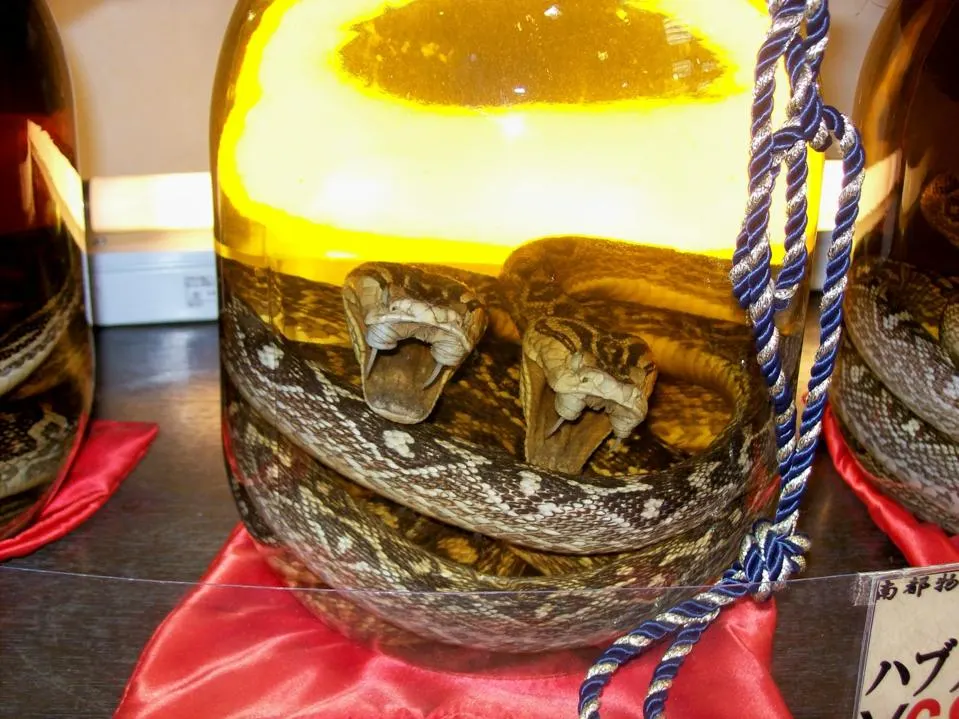
- Made with the fermented body of a habu, the poisonous snake native to Okinawa.
Arts
With the popularity of omiyage (souvenir) culture in Japan, some of the traditional arts of Okinawa have taken on a new life, becoming staples of gift giving. While each of the arts have a rich history, they have been adapted so that everyone may enjoy them. Many local businesses sell these traditional gifts, and some stores even let you make your own!
Shisa (シーサー)
A cross between a lion and a dog, Shisa are often seen atop roofs and gates for protection and good luck. Shisa are always in pairs thought to be a female and a male.
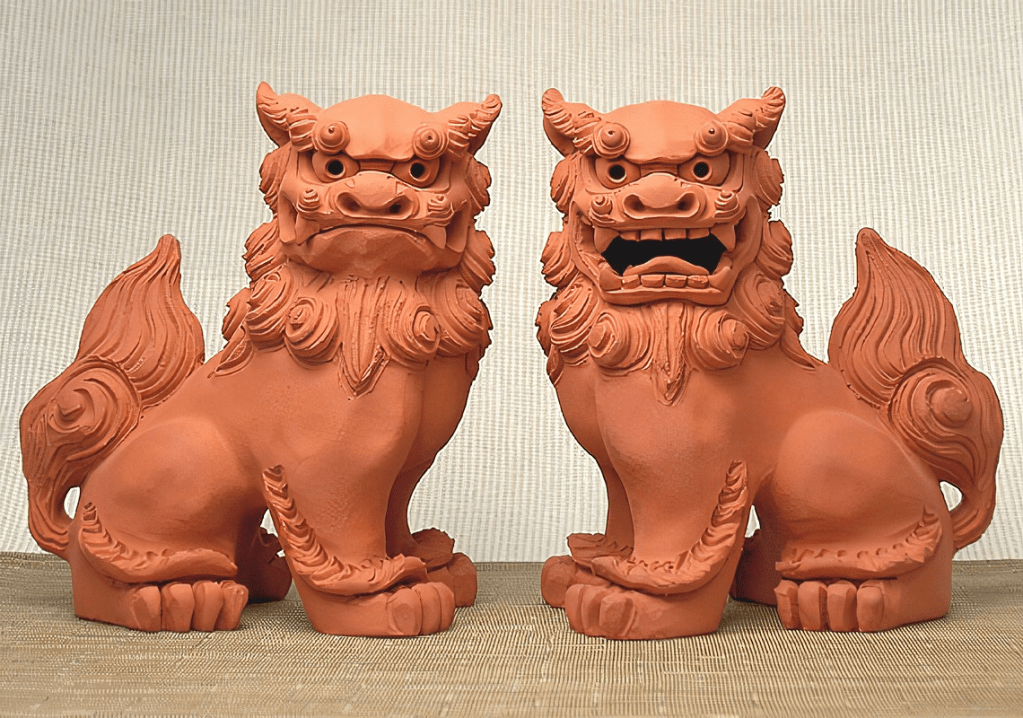
There is much debate as to which Shisa is which–some believe the open-mouthed male scares away evil and the close-mouthed female keeps in goodness, and some believe the close-mouthed male keeps out evil and the open-mouthed female shares goodness. As Shisa have become the mascot for Okinawa, many artists have taken inspiration and created their own Shisa designs. Shisa can be seen in intricately sculpted glass, simply molded clay, and cutely designed drawings.
- Many studios offer workshops where you can purchase and paint your own set.
Bingata
Bingata is a traditional cloth dyeing method that uses masking starch as a stencil to create designs. The word is said to originate from the combination of two words: bin, meaning ‘colors’, and gata, meaning ‘forms’.
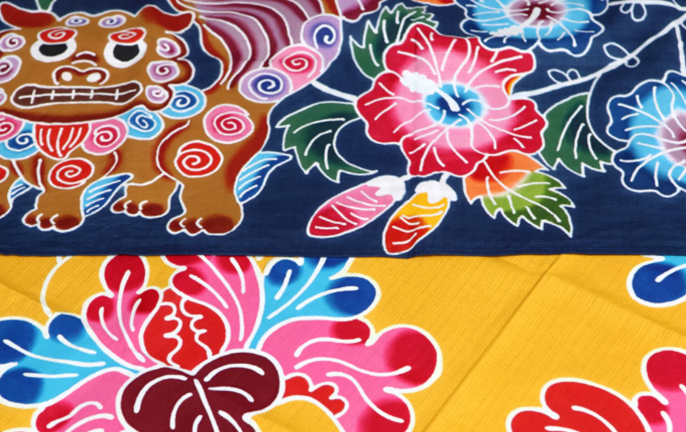
Bingata are usually brightly-colored with various patterns featuring themes from nature. Clothes made from bingata are worn during traditional dance performances.
- Many studios, such as Gusuku Bingata, offer workshops where you can make your own bingata design on a tapestry, tote bag, or other similar products. The process of making your own bingata is very similar to painting, but with a large leeway for mistakes.
Ryukyu Glass
Unlike the making of Shisa and bingata, glass making in Okinawa is fairly recent, dating back to 1900 when glass makers from mainland Japan visited Okinawa. During World War II and its aftermath, glass production came to a halt; however, it quickly began again as the demand for tableware and souvenirs by military personnel grew.
As resources were scarce, glass makers attempted to use discarded Coke and beer bottles. However, these discarded bottles, when melted, contained impurities, resulting in glass that bubbled.
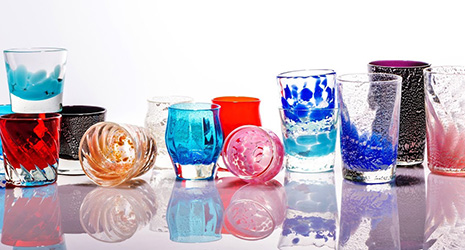
Today, these bubbles are a signature trademark of Ryukyu glass and only add to their beauty.
- Visit the Ryukyu Glass Village in Itoman City for a chance to make your own glass or other available crafts.
Performing Arts
Traditional performing arts dating back to the Ryukyu Kingdom can still be found in Okinawa today. In order to keep these traditional arts alive, they are often performed at various celebrations and events. Venues, such as the National Theater in Urasoe, also hold professional performances that are wonderful to watch.
Ryukyu Buyu
Often shortened to Ryubu, Ryukyu Buyu is a subtle dance form where hand movements are used to express emotions. Ryubu is almost always performed to the sound of the sanshin, or Okinawan banjo. In addition to the hand movements, dancers will sometimes use yotsutake, a small instrument that produces a clack when hit together.

In addition to the classic dances dating back to the Ryukyu Kingdom, some dancers also perform modern songs, creating an upbeat and exciting performance.
Eisa (エイサー)
Eisa is a traditional folk dance that centers around the use of drums. There are five roles in eisa: paranku (small, flat drum), shimedaiko (a two sided drum), odaiko (big drum), chondara (a clown character), and various dancers. While eisa performances can be seen at various events and festivals throughout the year, the Obon (also called Kyubon in Okinawa) holidays are closely linked with eisa. On the first day of Obon, the sound of the eisa drums are used to guide and welcome ancestors, and on the last day of Obon, the drums are used to bid farewell as each family’s ancestors take their leave.
Those interested in joining an eisa group should check out their local community center or check with Block 2`s JETs, as Okinawa City (located in Block 2) is the center of eisa.

Karate
The birthplace of karate, Okinawa has produced many different styles. Mainland Japanese predominantly practice shotokan karate; however, Okinawans prefer uechi ryu, goju ryu, and shorin ryu. Karate is often linked with kobudo, an Okinawan martial art known for its use of unconventional weaponry. An example of this martial art can be seen in American movies like “Teenage Mutant Ninja Turtles” where characters use the sai and the nunchaku.
Karaoke
A popular activity in Japan, karaoke is a great way to escape the heat and have fun with friends and coworkers. While there are plenty of English language songs from which to choose, Okinawan songs are still the most popular at any karaoke session. Here are some of the most common songs that you will undoubtedly hear:
- Shimanchu nu Takara by Begin
- “Islander`s Treasure,” Shimanchu nu Takara is considered to be the anthem for Okinawa. We recommend practicing it as Okinawans will be touched to hear you sing it with them.
- BEGIN/島人ぬ宝
- Dynamic Ryukyu
- A powerful song that blends well with the sound of eisa drums, Dynamic Ryukyu is a fun song to sing. While perhaps not as popular as some of the other songs on this list, Okinawans will be very impressed that you know it and can sing along.
- ダイナミック琉球/イクマあきら
- Umi no Koe by Kiritani Kenta
- “Voice of the Sea,” Umi no Koe is a very gentle song that pairs well with the sanshin.
- 「海の声」 フルver. / 浦島太郎(桐谷健太) 【公式】
- Sanshin no Hana by Begin
- “Sanshin`s Flower,” Sanshin no Hana is another popular song by artist Begin.
- BEGIN/三線の花
 Okijets