
Overview
The Okinawan heat could be best described as immediately sweltering. If you are not used to heat and humidity, it can be quite overwhelming at first. In addition to trying to keep comfortably cool, the summer season also brings a host of unwelcome visitors in the form of moisture, mold, and pests. All of the items and products listed below can easily be obtained at your local supermarket, drugstore, or online through Amazon.
- Regarding Sweat
- Regarding the Sun
- Regarding Heatstroke
- Regarding Air-Conditioning
- Regarding Moisture
- Regarding Mold
- Regarding Pests and Insects
Regarding Sweat
Due to the high humidity, sweating is unavoidable for most of us. Although it might seem strange at first, all Japanese carry around a small hand towel. This hand towel serves the dual purpose of dabbing off sweat and drying your hands after you wash them (paper towels are not available in all restrooms). In addition to a hand towel, there are many other products available to help you cool off in the summer months.
Face and body wipes
Gatsby and Biore both make cooling wipes that can be used all over the body. Most of these wipes contain menthol, so be careful when using them around your eyes, nose, and mouth. Some of these wipes promise to lower your skin temperature in the wiped area by three degrees. Because of this, these wipes can be quite intense and cause a mild burning sensation. When testing out which wipe will be most effective for you, please dab in sensitive areas.
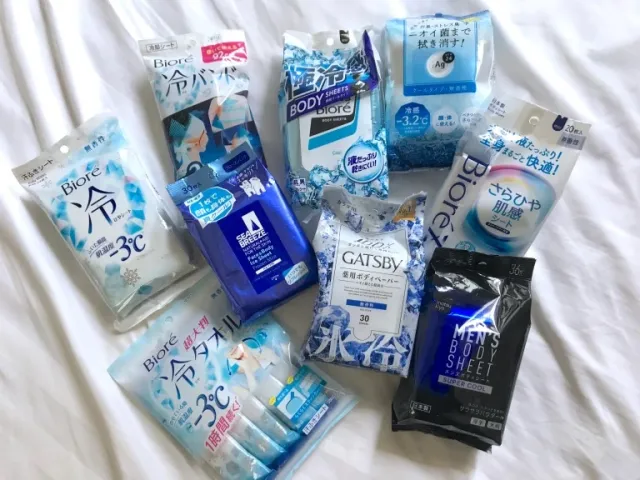
Hand Fans
Sensu, folding hand fans, and uchiwa, flat hand fans, are common accessories. Recently, electric hand fans have also become quite common. Finding one that can fit in your bag or at your desk is highly recommended.
Regarding the Sun
In addition to the heat and humidity, Okinawa also has an extremely high UV index, meaning that the intensity of the sun’s rays can cause damage to your skin. To ensure your skin is protected, it is recommended that you always wear sunscreen (hiyake dome ひやけどめ 日焼け止め) and reapply it often. Many Okinawans will also wear a hat and use an umbrella when outside for long periods.
Sunscreen Recommendations
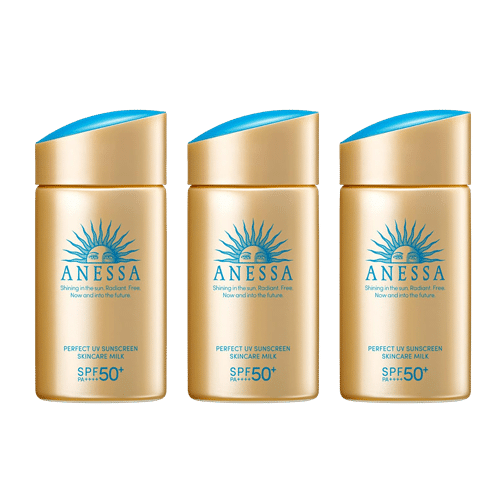
- ANESSA Perfect UV Skincare Milk
- Lightweight sunscreen that contains skincare ingredients and prevents sand from sticking to your skin
- Biore UV Aqua Rich Watery Essence
- Lightweight and long-lasting sunscreen
- SKIN AQUA Tone Up UV Essence
- A lightweight sunscreen that also has color-correcting properties (the pink packaging smooths out skin to give an overall brightening effect; the green packaging helps reduce the appearance of redness)
Regarding Heatstroke
Due to the high humidity levels in Japan, heatstroke is a common illness that hospitalizes 50,000 people every year. While those over 65 years of age and those with chronic illnesses are more susceptible to heatstroke, everyone should take preventative measures as well as familiarize themselves with the symptoms. Heatstroke can occur from both prolonged exposure to high temperatures and humidity as well as from strenuous activity.
Heatstroke Symptoms
- High body temperature
- Altered mental state or behavior
- Lack of sweat
- Nausea and vomiting
- Flushed skin
- Rapid breathing
- Racing heart rate
- Headache
Heatstroke Treatment
- Call 119, the emergency medical number.
- Get into the shade or indoors.
- Remove excess clothing layers.
- Use any means available to cool off (water, cooling body wipes, a fan, etc.).
Heatstroke Prevention
- Wear lightweight, loose fitting clothing.
- Wear sunscreen and reapply it often.
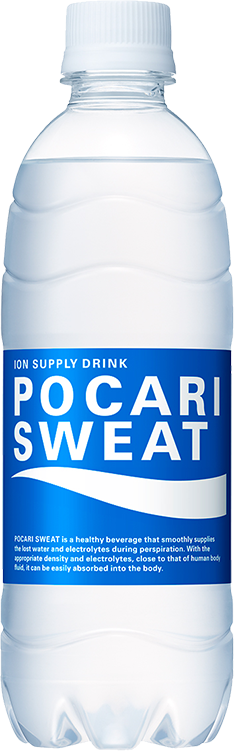
- Stay hydrated (suibun hokyu すいぶんほきゅう 水分補給)
- In addition to water, Pocari Sweat, Aquarius, and fruit juices are great ways of keeping hydrated.
- Limit diuretics, such as alcohol and caffeine.
- Take it easy between 10 AM and 3 PM, when the sun is at its strongest.
Heatstroke can be a life-threatening emergency. If you believe you are experiencing heatstroke, seek immediate medical attention.
Further Information:
Heatstroke – Symptoms and causes – Mayo Clinic
Naha, Okinawa | Heatstroke Risk Information | NHK WORLD-JAPAN
Regarding Air-Conditioning
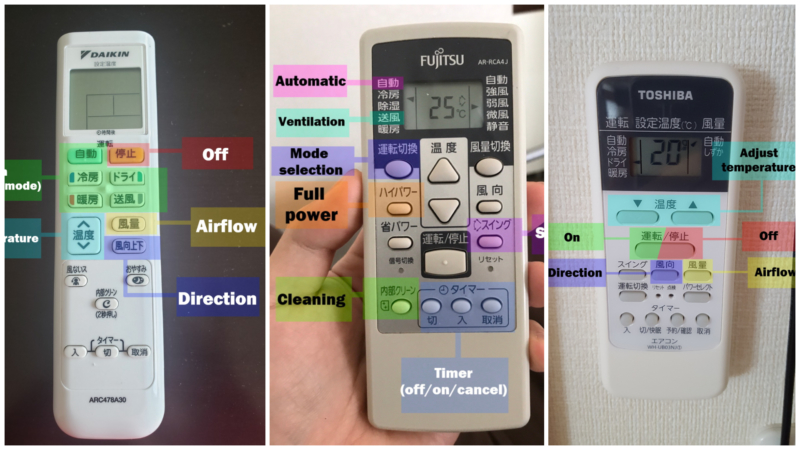
Due to the high humidity, airconditioning is fairly common in Okinawa. Most apartments will come equipped with a wall unit. If your apartment is not equipped with a unit, please talk to your coordinator and apartment rental agency about purchasing and installing a unit. If you have a unit, here is some basic information about using and caring for your unit:
Cleaning
It is recommended that everyone cleans their air-conditioning unit once a year during the spring to ensure that the unit will run efficiently during the summer months. If you do not feel up to the task of cleaning the unit yourself, there are many professionals who offer this service.
To clean the unit yourself, follow these basic steps:
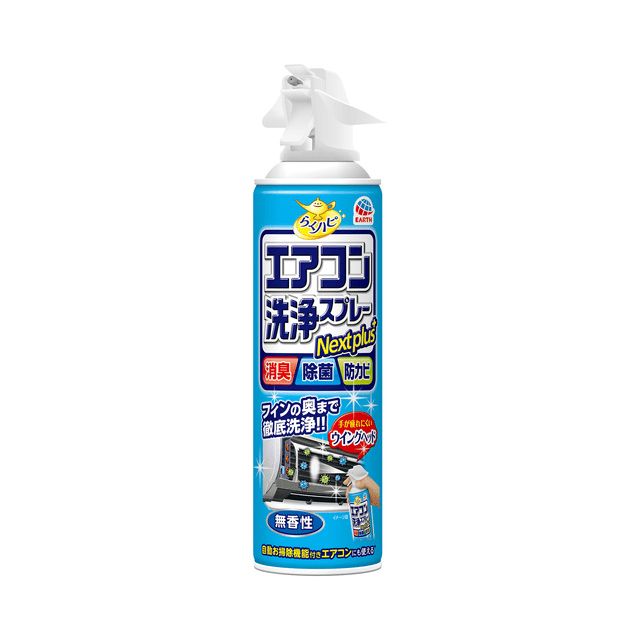
- Buy air-conditioner cleaner
- Unplug the unit
- Remove the inside filter and clean it (outside as it is dusty)
- Apply the cleaner following the instructions on the can
- Reassemble the unit
- This site offers a step by step guide in English with pictures: Cleaning Your Air-Conditioning Unit.
Air-Conditioner Settings
While everyone’s remote control may differ in appearance, every unit is capable of three basic settings: cool, dry, and heat.
- Cool (reibo れいぼう 冷房)
- This is the setting that you will probably use the most on your unit. As tempting as it may be to set your unit to 20℃ (68℉), please note that the optimum temperature for cooling and efficiency is around 24℃ (75℉).
- Many OkiJETs are surprised when they receive their first electricity bill in the summer. If you run your unit at a low temperature 24/7, please note that your electricity bill for the month can be upwards of ¥10,000.
- Dry/Dehumidification (dorai ドライ, joshitsu じょしつ 除湿)
- While the cool setting is great and produces a more immediate effect, the dry/dehumidification setting is also worth trying. This setting reduces the amount of moisture in the air and does not require as much energy as the cool setting, making it a more cost effective option.
- In addition to using this function for cooling purposes, it is also a great setting to use during the rainy season to help dry laundry hung inside.
- Please note that ideal running time in this setting is an hour to two hours. Running it for too long can cause the air to become uncomfortably dry.
- Heat (danbo だんぼう 暖房)
Regarding Moisture
While moisture is a problem during the sweltering days of summer, it is especially noticeable during the rainy season. On muggy days, moisture tends to collect and pool on things such as your fridge/freezer, windows, doors, walls, and even under beds/futons. Because everyone’s apartment differs, we recommend waiting for a muggy day and checking for moisture build-up in the common places listed above. Make note of which places collect moisture and lay a towel or newspaper down to collect moisture build-up during the day.
- Dehumidifying Containers (kansozai かんそうざい 乾燥剤; shikketori しっけとり 湿気取り)
- These little plastic containers hold a dehydrating agent that helps prevent moisture build-up in enclosed spaces, such as drawers, closets, shoes, pockets, cupboards, and the wash closet/toilet.
- To store your winter clothes and bedding, carefully fold them into a plastic bag along with a few shikketori packets.

- Antifungal Lining (bokabi bochuzai ぼうカビぼうちゅざい 防カビ防虫剤)
- When used to line your drawers, this lining prevents mold formation as well as acts as a dust mite repellent.
Regarding Mold
Mold (kabi かび 黴) thrives in moist environments and produces spores that can be damaging to one’s health. While mold spores can be especially dangerous to the elderly and those with compromised immune systems, mold can cause respiratory problems in otherwise healthy people. Mold grows in moist places, such as the bathroom, the kitchen, and other high-moisture areas. Mold can appear as a discoloration, a dark spot, or a fuzzy spot. Mold also causes a musty smell. Here are some recommendations to prevent and fight mold growth:
Products
- Sodium Bicarbonate (tansan suiso natoriumu 炭酸水素ナトリウム)
- Commonly known as baking soda, sodium bicarbonate can also be used to kill mold without harsh chemical effects.
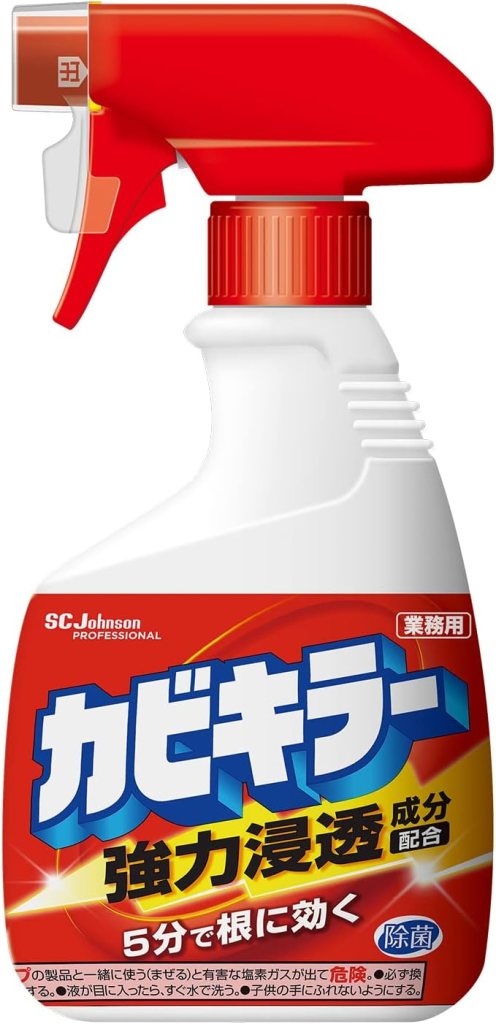
- Kabi Killer カビキラー
- This spray can be found in most drug stores and supermarkets. Please be sure to wear gloves and a mask when handling it. Do not mix this spray with any other products.
Mold Prevention
Proper ventilation can greatly reduce mold growth. Open doors and windows after showering and cooking to increase airflow. Run exhaust fans. Reducing and keeping humidity levels low will also keep mold from forming. If needed, a hygrometer (humidity meter) can be purchased online through Amazon. Ideal humidity in a home is around 45%.
Tatami Mats and Futons
If you have tatami mats and/or a futon, please be sure to familiarize yourself with proper care routines. While tatami mats are elevated, your futon can collect moisture where it rests against the tatami. It is recommended that you carefully fold and put away your futon every morning. On sunny days, many Japanese people will take their futons outside and beat it with a futon tataki (布団たたき), a specially designed stick that releases dust mites and other allergens. You can also take your futon to a dry cleaning store for a deeper clean.
Regarding Pests and Insects
Depending on the area in which you live, some pests and insects will be more common than others. When you have unwanted visitors in your home, try out some of the following remedies:
For Cockroaches (gokiburi ゴキブリ):
Cockroaches in Japan tend to be big. They can enter from a variety of places including the crack under the door, kitchen drains, bathroom drains, windows, and other similar spaces. Regular spraying and cleaning can help keep them away. Be especially careful during the rainy season as cockroaches thrive in high humidity.
- Gokiburi hoi hoi
- This roach trap is shaped like a house that you simply assemble and leave out. When a cockroach gets stuck on the trap, you can simply toss it in the garbage.
- Hosan Dango
- Made from boric acid and onions, this bait will kill any indoor cockroaches.
- Barusan
- This is an insecticide bomb that requires you to vacate your apartment for four hours after use. As this is quite powerful, it will kill a variety of insects.
For Mites, Fleas, and Ticks (dani ダニ)
While mites are not generally hazardous, their bites can be persistent and quite itchy. Here are some prevention tips and products:
- Washing and Hanging
- Mites are sensitive to UV light, so washing and then hanging your bedding outside is an easy, natural way to eliminate them.
- Dani Asu
- Use this product on your tatami mats by inserting the needle and spraying in several places
- ダニがいなくなるスプレー (Mites Begone Spray)
- This spray can be used once a month on tatami mats, mattresses, fabric sofas, and other soft surfaces.
- Dani Corners
- This is a flat repellant sheet that slips underneath bedding
- Dani Taiji
- This is another spray type that lasts about 7 days

For Mosquitoes (ka か 蚊)
Depending on your area, mosquitoes may be more prevalent. Construction sites can stir up batches of them, so be careful around those spots.

- Herb Mushiyoke
- This is a room deterrent with a soft scent.
- Saratect
- This is a spray repellent that also works on dust mites. It can be used on both bedding and skin.
- Skin Vape
- A water-based repellent, Skin Vape is a nice smelling spray that can be used by both children and adults.
- Skincare Aqua Guard
- This mist repellent comes in a small can and is easy to carry around.
For Lizard and Geckos (yamori やもり 家守)
While lizards and geckos are not hazardous and do eat other insects, they can be quite unwelcome in an apartment. They often slip in through cracks in the window or doors. It may be hard to spot a well-hidden one, but they can easily be identified through the unique laughing sound they make in a silent room.
- Broom and Container
- The best way to remove an unwanted lizard or gecko is to capture it. Because they can be quite fast, it is best to get it on an easily accessible, flat surface. When there, use a large container to quickly trap it against the wall and then take it outside. Release it far away from your apartment if you do not wish to see it again.
- Gokiburi hoi hoi
- If you cannot trap a lizard or gecko, a passive option would be to use a roach trap. If the lizard or gecko gets caught in the glue, simply toss out the trap in the garbage.
For Insect bite relief
- Muhi S
- This anti-itch cream comes in a small tube and leaves no residue. It is also available in liquid.
- Kinkan
- This liquid anti-itch medicine comes with a sponge applicator so it can be easily rolled onto the affected area.
- Unakowa Cool Punch
- This anti-itch liquid is applied via brush and gives a cooling sensation to the applied area.

 Okijets
Leave a comment