
Overview
Typhoons are a large storm system characterized by a spiral or circular pattern of violent winds. In the Atlantic and eastern Pacific Oceans, these storm systems are referred to as hurricanes. In the Indian Ocean, they become tropical cyclones. In the Western Pacific Ocean, which includes Japan, these storms are called typhoons (taifu たいふう 台風).
Typhoon Information
The Regional Specialized Meteorological Center (RSMC) in Japan uses a Tropical Cyclone Intensity Scale which is as follows:
- Tropical Depression: wind speeds lesser than 61 km/h (37 mph)
- Tropical Storm: wind speeds between 62-88 km/h (38-54 mph)
- Severe Tropical Storm: wind speeds between 89-117 km/h (55-72 mph)
- Typhoon: wind speeds between 118-156 km/h (73-97 mph)
- Strong Typhoon: wind speeds between 157-193 km/h (98-120 mph)
- Violent Typhoon: wind speeds higher than 194 km/h (121 mph)
With one-third of the world’s tropical cyclones forming in the western Pacific, this area is the most active on Earth. However, these storms follow different tracks, meaning that they do not always make landfall or they make landfall in different places.
Typhoons in Okinawa
Due to its southern location, Okinawa Prefecture experiences an annual average of seven to eight tropical storms between the months of May to September. Thankfully, many of these storms do not reach the classification of typhoon and cause very little damage. Okinawa does, however, occasionally experience strong storms.
In August 2023, Typhoon Khanun battered several islands in Okinawa as well as the countries of China, Korea, and Russia. Typhoon Khanun, categorized as a Strong Typhoon (Category 4-equivalent hurricane on the Saffir-Simpson scale), left 30% of Okinawa residents without electricity and many without running water. While not all typhoons are this severe, there are several things all OkiJETs are encouraged to do to prepare:
Before Typhoon Season Starts
Number 1: Emergency grab bag
Before typhoon season starts, prepare an emergency grab bag (this bag can also serve in the case of other emergencies). While these types of bags can be purchased through Amazon, you can also make your own using supplies found at Daiso. Basic items should include:
- Basic First Aid Kit
- Scissors
- Rain Poncho
- Work Gloves
- Flashlight & Spare Batteries
- Garbage/Waste Bags
When finished assembling your emergency grab bag, please place it in an easily accessible location.
number 2: work contact
Knowing who to contact at each of your schools can be of great assistance in case of emergency. Because many students walk to school, classes will often be canceled for their safety if a typhoon is predicted to be strong. However, this does not mean that work is canceled. While staff members have the option of using their paid time off (PTO, nenkyu), special leave (tokyu) is only granted if the buses stop running. Because this can be hard to track, it is highly recommended that you get the contact information of someone at work who can help keep you informed. This person may be your supervisor, coordinator, a JTE, or a school office staff member.
Please note that work may grant special leave (tokyu) for other storm-related problems, such as power outages in the area, downed trees, or flooding. Because of this, you may get special leave, but other OkiJETs may not be in the same position.
number 3: emergency exit and evacuation routes
While evacuation orders are rare, it is important that you familiarize yourself with the emergency evacuation location(s) in your area. This information should have been given to you upon registering at your local town/city hall. If you do not remember the location, please check the official website for your town/city. During an emergency, you may not have access to your car or your cell phone, so it is important that you can reach this location on foot by memory.
Depending on your apartment, you may have an emergency escape. This emergency escape may be through your balcony or around the side of your building. Familiarize yourself with the escape route ahead of time. This also holds true at your workplace. If you work at a school, you may be able to participate in the annual emergency drills. If you work elsewhere or are not able to participate in a drill, please ask around for this information.
As a Typhoon Approaches
Number 1: Supplies
Since many typhoons are predicted a week in advance, plan to buy supplies before the typhoon arrives. As everyone else will also be buying supplies at the same time, we recommend going earlier to ensure you can find what you want. The best option, of course, is to always have these items on hand to avoid looking for them at the last minute.
- Cash
- Water Bottles
- Groceries (ready-to-eat foods, canned foods, instant ramen, snacks)
- Necessary Medications
- Candles
- Hand Fans (in case of power outage)
- Spare Batteries
For outer-island JETs, it may be a few days before the supply boats resume their normal schedule after a typhoon passes. Before the typhoon comes, be sure to bulk buy any perishable foods that you think you may need.
number 2: Car preparation
If you own a car, plan to go to the gas station. Because of the strong winds associated with typhoons, empty cars can be knocked over. Filling your car with gas will help weigh it down and prevent this from happening. Please note that gas stations become increasingly busy as typhoons approach, so aim to fill your tank sooner rather than later.
Number 3: Apartment preparation
While many of the typhoons that strike Okinawa are not a great cause for concern, taking basic precautions is strongly recommended. This is especially true if you are planning on taking a trip during the typhoon season. Remember that insurance does not cover for negligence.
- Bring in everything from outside
- Due to the strong winds of a typhoon, things not properly tied down may be carried off or knocked down and broken. For safety, it is best to bring in everything that you can.
- Prep outside things that cannot move
- For things that cannot be moved, such as an outdoor washing machine, please prepare them as best as you are able.
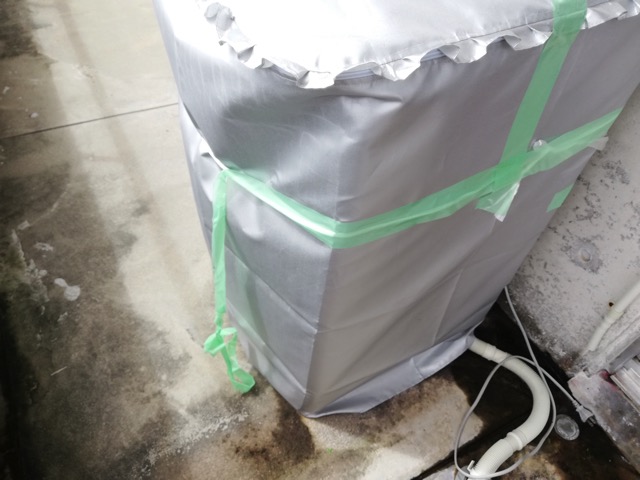
- Outdoor washing machines should be covered and then taped. The cover will also help protect your machine from getting dirty. Covers can be bought online through Amazon or at stores such as Makeman. In addition, the recommended tape for typhoon preparation is yojo tape (ようじょう 養生テープ). This tape can also be found on Amazon or at Makeman. When using this tape, please be careful as it is extremely sticky and will leave hard-to-clean streaks.
- For more information, read this Japanese article: 外置き洗濯機
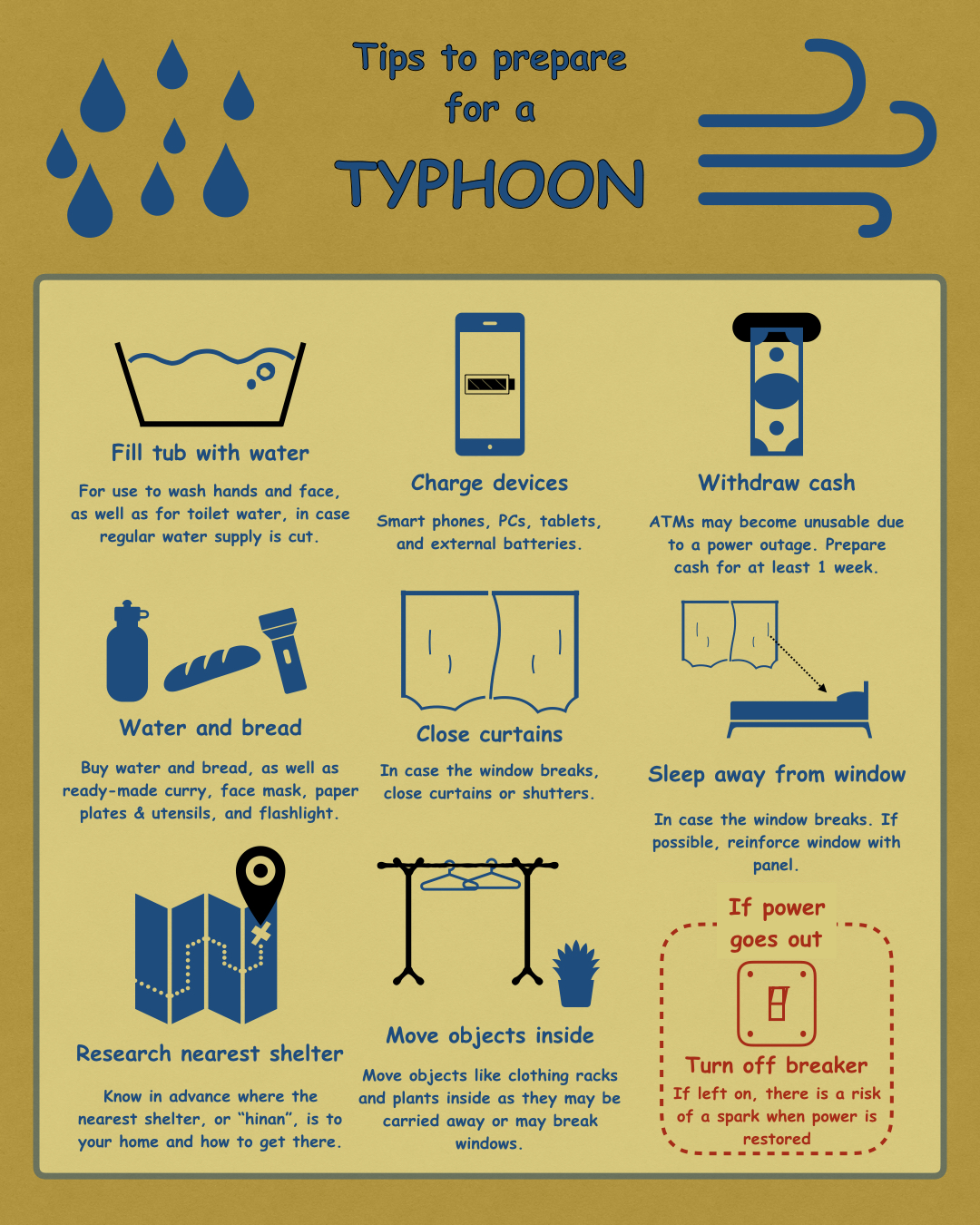
- Fill your bathtub with water
- While rare, water supply can be cut during a typhoon. Filling up your bathtub ensures you have water to flush your toilet and wash up.
- Close all doors and windows
- It is important that you close all the doors, windows, and curtains in your apartment, especially if you are planning to take a trip during typhoon season.
- If you have storm shutters, be sure to close those as well.
- For extremely strong typhoons, you can also tape your windows to strengthen the glass against gusts. For most typhoons, however, this is not necessary.
- Lay down newspaper
- While properly closing all doors and windows will prevent most water from entering, it is recommended that you stuff newspaper into the cracks to help soak up any extra leakage. If you do not have enough newspaper, you can also use spare towels.
Number 4: Prepare activities
Because typhoons can last for a few days, we recommend preparing some activities that can keep you occupied while you stay sheltered.
- Charge all devices
- Download/rent/buy some books
- Download/rent/buy some movies
- Buy a card game
- Prepare Japanese study materials
During a Typhoon
While there isn’t much to do during a typhoon besides wait, remember to stay aware of your surroundings in case the situation changes. Refresh news pages every so often for updates, and consider staying in touch with those in your immediate area to know what’s going on beyond your door.
Typhoon Resources include:
Japan Meteorological Agency | RSMC Tokyo – Typhoon Center (jma.go.jp)
Japan Weather Forecast | NHK WORLD-JAPAN News
In the event that communication lines are downed, the major cell phone carriers in Japan have created emergency message boards that allow you to leave record of your location and your status:
Docomo Disaster Alerts
SoftBank Disaster Alerts
After a Typhoon
Number 1: Clean up
After a typhoon passes, it is important to clean up and assess any damage that might have occurred. Be sure to report any damage to your supervisor or coordinator so they can help you contact your rental agency if need be.
 Okijets
Leave a comment